
Last updated November 25, 2026
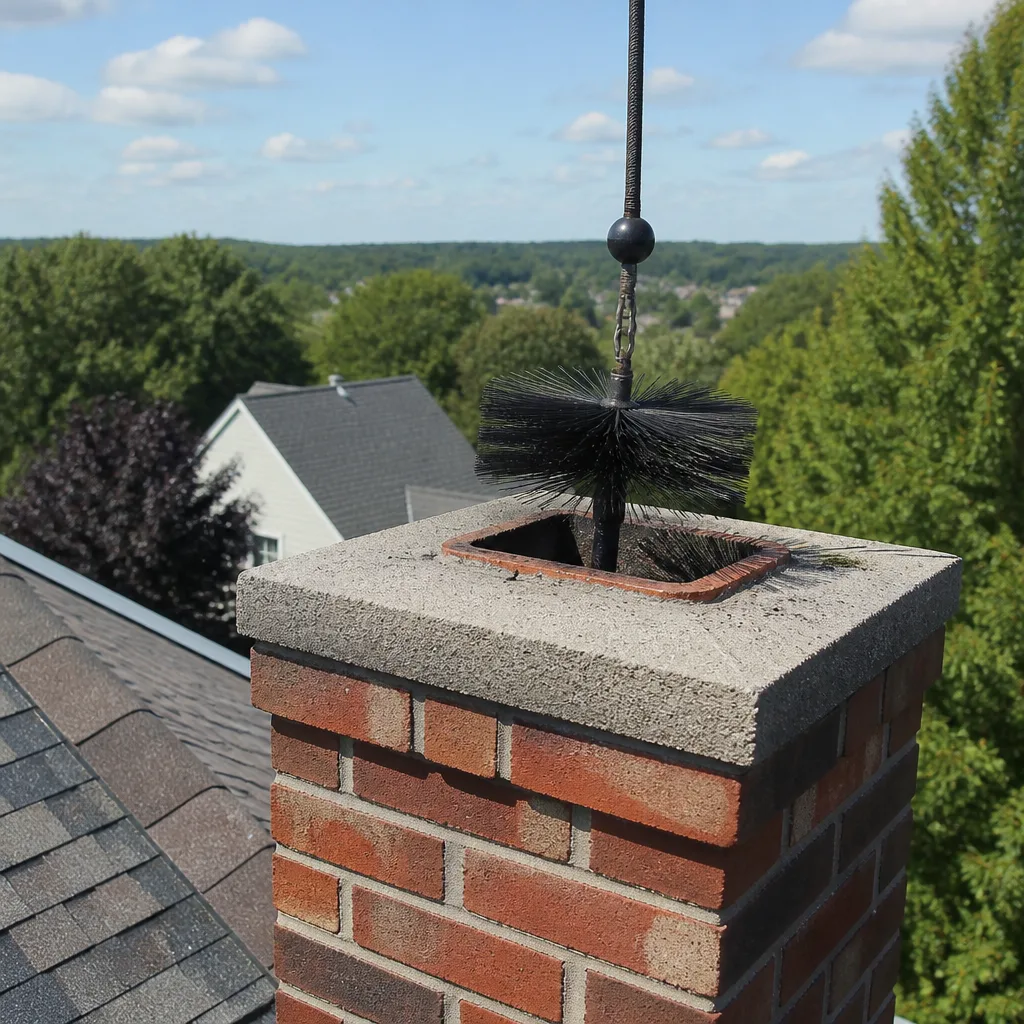 Sweep & inspection
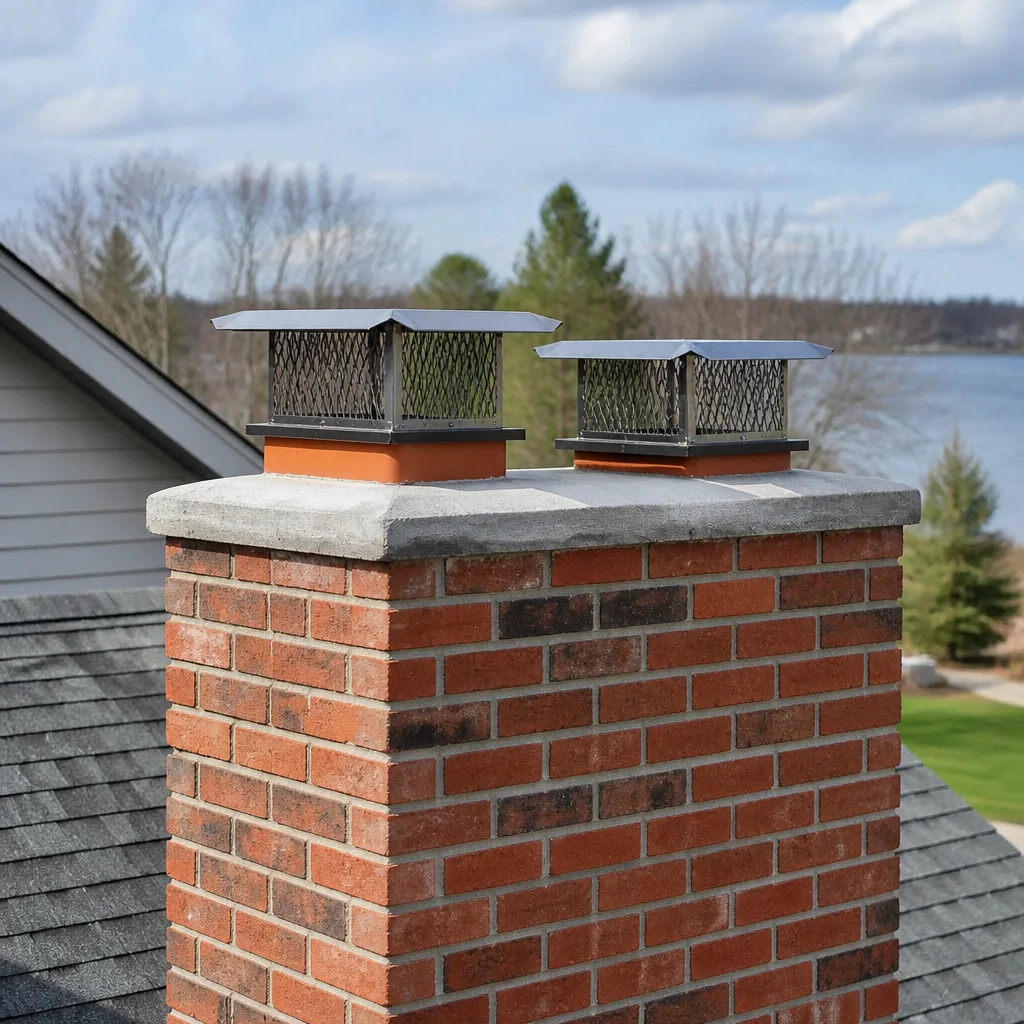 Caps & crowns
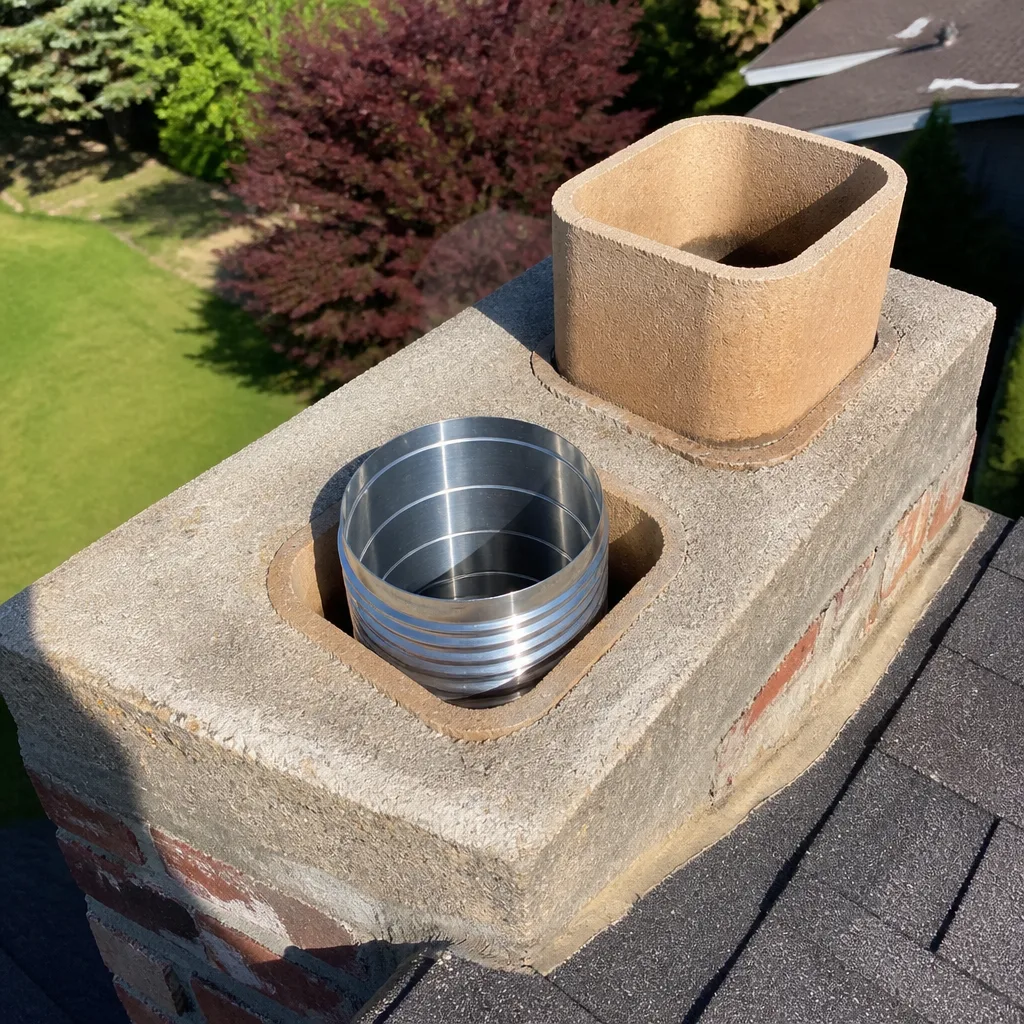 Flue relining
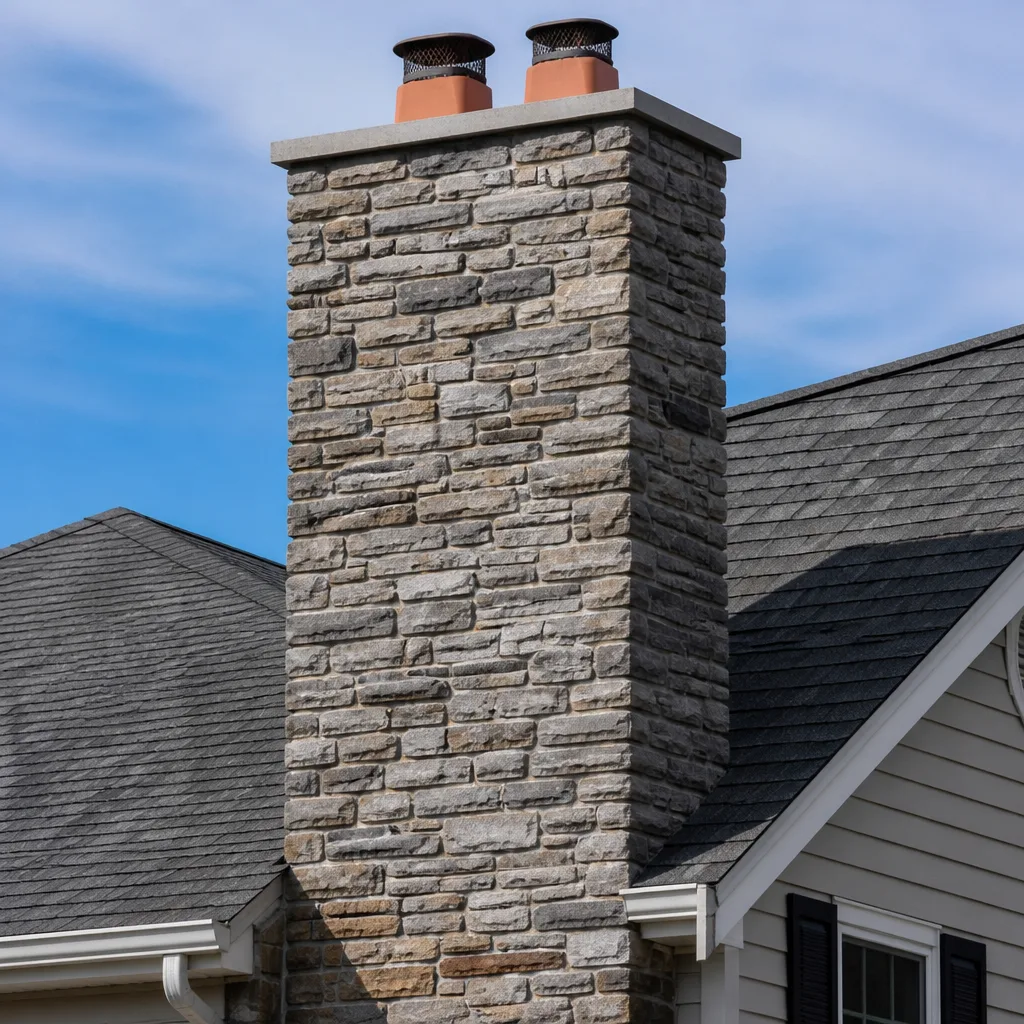 Masonry repair
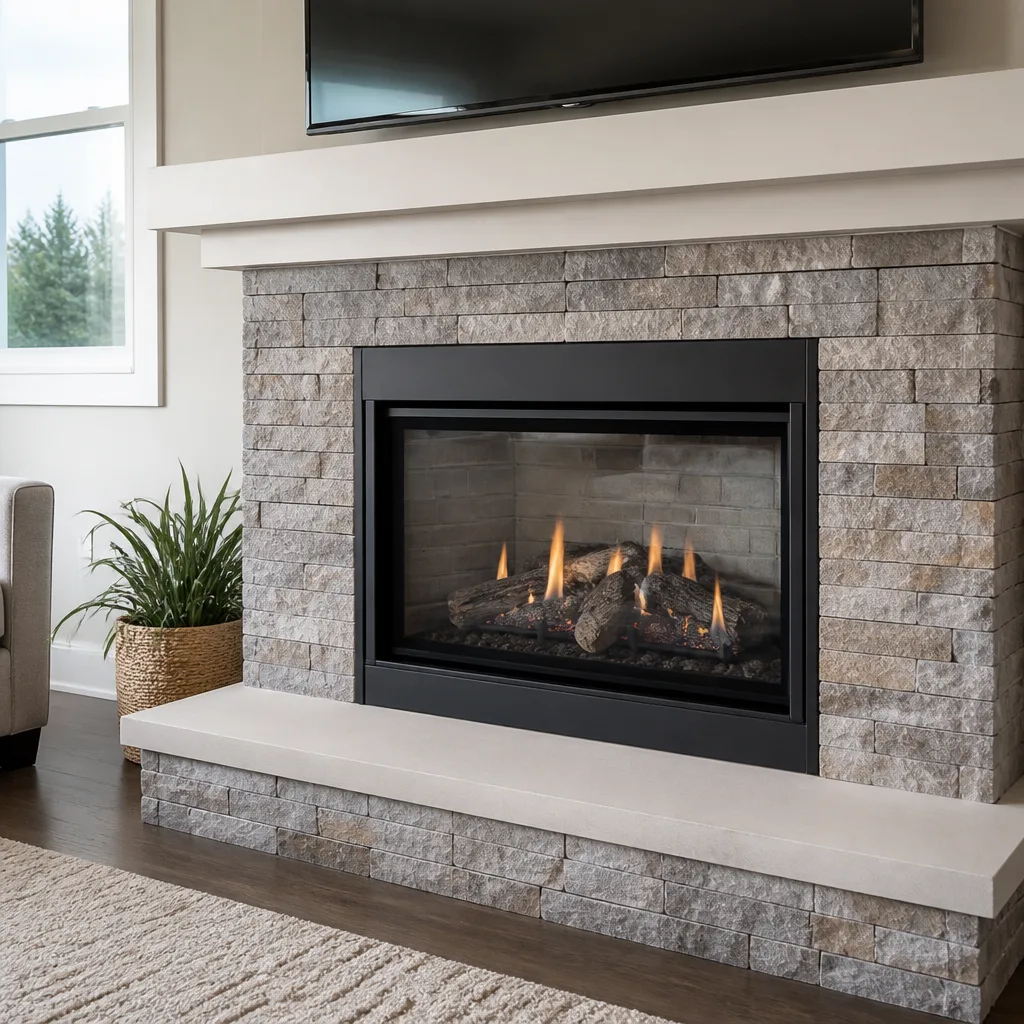 Gas fireplace service
Level 1 sweep and inspection to the NFPA 211 annual standard - flue, crown, cap, and flashing checked and photographed
Chimney sweep logs do not sweep chimneys. They loosen some creosote - which then falls where a brush and vacuum still have to collect it.
Chimney Sweep Maintenance Checklist for Tustin Homeowners
Most chimney maintenance advice you’ll find online was written for a house in Ohio. It assumes hard freezes, heavy snow loads, and a long heating season. Tustin isn’t that. Our winters are mild, our burning season is short and intense, and the biggest threat to a chimney here comes from dry Santa Ana wind events that push fine debris and backdraft pressure through a flue in ways a national checklist never accounts for. That’s why a generic “sweep once a year” plan quietly fails a lot of Tustin homeowners. This guide is built around the variables that actually determine your chimney’s condition: fuel type, liner age, cap and crown material, and the local weather patterns that stress all three.
Quick Answer
A chimney in Tustin needs four things to stay safe and functional: an annual sweep and inspection, a pre-season debris and damper check before burning season starts, an inspection after each significant Santa Ana wind event, and a crown and cap review before the first rain. Fuel type and liner material determine how often each step applies to your specific chimney. The checklist below walks through every stage across the full year.
Styles & brands we work with
- Sweep & inspection
- Caps & crowns
- Flue relining
- Masonry repair
- Gas fireplace service
Table of Contents
- Why a Generic Chimney Checklist Doesn’t Fit Tustin
- Pre-Season Checklist: What to Do Before October
- Post-Santa-Ana-Event Inspection Protocol
- Annual Crown and Mortar Inspection
- Mid-Season Draft Check: Reading Your Fireplace
- Off-Season Cap and Storage Maintenance
- Fuel Type and Liner Age: The Two Variables That Change Everything
- The Annual Sweep: What We Actually Do
- Common Mistakes to Avoid
- When to Call a Professional
- Frequently Asked Questions
- The Bottom Line
Why a Generic Chimney Checklist Doesn’t Fit Tustin
A chimney checklist is only useful if it matches the conditions the chimney actually experiences. National guides tend to assume a northern climate with a long, wet heating season. Tustin’s burning season is shorter, but the surrounding environment puts different pressure on the system. Dry, hot summers followed by Santa Ana wind events create a specific pattern of debris accumulation and barometric backdraft that most checklists never mention. At the same time, our brief but real rainy season makes water intrusion the single most common cause of premature chimney damage in Tustin homes with older masonry.
Fuel type is the second variable. A wood-burning fireplace produces creosote and soot that have to be swept on a predictable schedule. A gas insert produces almost no creosote but can deposit corrosive condensation on a liner over time. A pellet stove has its own maintenance rhythm. Each of these chimneys needs a different checklist, and treating them the same way is how homeowners end up either sweeping too often (a waste of money) or not often enough (a fire risk).
Liner age matters just as much. Clay tile liners installed decades ago can hairline-fracture from thermal cycling without any visible sign from the firebox. A modern stainless liner from DuraFlex behaves differently and holds up longer, but it still needs to be verified during the annual inspection. The checklist we walk through below is built to flex around these three factors: local weather, fuel type, and liner material. If you already know your chimney is overdue, our chimney sweep page explains what a proper cleaning includes and what to expect from the visit.
Pre-Season Checklist: What to Do Before October
October is the turning point in Tustin. The dry season is winding down, the first Santa Ana wind events have usually arrived, and homeowners start thinking about the first fire of the year. Doing the pre-season steps in the right order makes the burning season safer and cheaper. This is the checklist we recommend for every chimney in the area.
- Clear dry-season debris from the firebox and smoke shelf. Over the summer months, dust, fine ash, and the occasional leaf or insect nest collect inside an unused firebox. Clearing by hand from the firebox floor and up onto the smoke shelf is safe to do yourself. Anything above the damper should be left to a technician.
- Confirm the damper opens, closes, and seals. Summer heat expansion and contraction can leave a damper sticking open or failing to close fully. A damper that stays partly open lets air-conditioned air escape in summer and lets smoke spill into the room in winter. Open and close it several times by hand, and listen for metal-on-metal rattling or grinding.
- Look up the flue with a flashlight. From the firebox, shine a light up the flue and look for obvious soot buildup or visible cracks in the tile. If anything looks wrong, stop and schedule an inspection rather than building a fire.
- Check the firebox walls for loose mortar or cracked brick. Hairline cracks in the firebrick are common and usually benign; loose mortar joints and displaced bricks are not.
- Check the chimney cap from the ground. Look for a cap that’s tilted, missing, or has visible birds or nests around it. A cap that has shifted in a summer wind event allows water and debris directly into the flue.
- Confirm your carbon monoxide detector is functional. Every wood-burning or gas chimney should be paired with a working CO detector in the same room or nearby.
This is also the moment to schedule the annual sweep if you haven’t already. Booking before the first cool week means you’re not competing for the calendar later. Our technicians have up to 10 years of experience, and we schedule a pre-season sweep with enough time left before the first fire to allow for any repair we find.
Post-Santa-Ana-Event Inspection Protocol
Santa Ana winds are the most underrated chimney hazard in Tustin. These dry, gusty offshore winds produce two effects that matter: they carry fine debris – dust, leaf fragments, palm frond matter – into the flue and onto the smoke shelf, and they create pressure swings across the chimney that can drive backdraft into a house even with a damper installed. After a significant Santa Ana event, a short walk-around inspection catches problems before they become calls.
Here’s the protocol we suggest after each notable wind event:
- Check the cap position from a distance. A properly seated Famco or Copperfield cap sits flush on the crown. If it’s tilted, lifted, or sitting at an angle, it has been displaced and needs re-seating before the next event.
- Look for debris on the smoke shelf. From the firebox with a flashlight, shine the beam at the smoke shelf above the damper. If you see a fresh layer of dust, small leaves, or palm frond fragments, that debris has been pushed into the chimney by the wind and should be cleared.
- Confirm there’s no smoke smell indoors with the damper closed. A faint smokey smell in the room after a wind event means the flue is being pressured through the cap or a poorly sealed damper. That’s worth a diagnostic visit.
- Check for liner fracture indications. This is a technician step, not a homeowner one, but a persistent smoky smell combined with a recent strong wind event is a reason to book an inspection rather than wait for the annual sweep. Fine tile fragments on the smoke shelf, when visible, are a red flag that the tile liner above has fractured.
- Note chimney-top damage from the ground. Look for missing mortar on the crown, a chunked or cracked crown edge, or any displaced brick from the top courses. Santa Ana gusts don’t typically fail a sound chimney, but they expose anything already weak.
In our experience, most “sudden” chimney problems that Tustin homeowners call about in October and November trace back to a Santa Ana event weeks earlier that went unnoticed. The inspection steps above catch them at the smallest, least expensive stage.
Annual Crown and Mortar Inspection
The crown is the concrete or mortar cap at the very top of the chimney, and it’s the single most important line of defense against water intrusion on a masonry chimney. A crown that has cracked or separated from the flue allows rainwater to run down the inside of the chimney, saturate the surrounding masonry, and eventually reach the ceiling and framing. Annual crown and mortar inspection is the cheapest preventive step in the entire checklist, and it’s also the one most often skipped.
What a crown failure actually looks like depends on the coating used. Saver Systems ChimneySaver crown coating is a widely specified flexible crown material, and when it fails it usually shows as hairline cracking, a chalky or “blushed” surface, or adhesion loss at the edges where the coating meets the flue tile. Those early signs matter because a ChimneySaver failure caught at the hairline stage is a recoat. The same failure caught three years later is often a rebuild, because water has already worked into the masonry below.
Annual mortar inspection uses a similar product-specific lens. Sound mortar joints should be firm and evenly colored. Joints that are recessed, sandy, or showing white powder on the surface are starting to fail. Small joint repairs are quick work. Wide-scale mortar deterioration across a large chimney face is a sign the chimney needs repointing, and that’s the point at which we recommend bringing in chimney repair rather than continuing to patch.
Both the crown and the mortar are safe to inspect from the ground with binoculars; anything at the top of the chimney is best handled by a technician on a proper ladder setup. The key discipline is catching the first sign of failure rather than the aftermath.
Mid-Season Draft Check: Reading Your Fireplace
Most chimney problems show up as a draft complaint first, long before a homeowner thinks to call. Mid-season is the right time to run a simple draft assessment that doesn’t require opening the firebox to full draft or going on the roof. The idea is to read what the fireplace is already telling you.
Here’s what to look at in the middle of the burning season:
- How fast does smoke pull up? When you light a fire, smoke should pull cleanly up the flue within a minute or two. If smoke lingers at the top of the firebox or rolls into the room, the draft is weak or the flue is partially obstructed.
- Is smoke spilling on reload? Adding wood to a hot fire should never cause a puff of smoke into the room. If it does, air is not feeding the flue fast enough, which is often a sign of a blocked cap or a partially closed damper.
- Does the fire burn too fast or too slow? A fire that races through wood in minutes is pulling too much air, sometimes through an open or leaky damper. A fire that struggles to catch is under-drafted, sometimes through a partially obstructed flue.
- Any smoke smell in the room with the fire out? A closed damper should hold back the smell of soot. If the room smells like a cold chimney, the damper isn’t sealing fully, or the flue is waiting for a cleaning.
- Any smoke in the room when a window is cracked open elsewhere? Modern homes are tight, and appliances competing for air can reverse a chimney. If opening a window elsewhere helps, the draft issue is pressure-driven, not chimney-driven.
None of these checks require disassembling anything or climbing on the roof. They do give you a clear signal that the chimney is under-drafting for a reason. If any of the above shows up, it’s a good time to have a proper inspection before continuing to burn.
Off-Season Cap and Storage Maintenance
Once burning season ends, the chimney still gets used by weather. Off-season home care is where a lot of water intrusion problems in Tustin start, because a cap that has done fine all winter can shift in a summer gust and quietly allow weeks of debris and rain into the flue. The off-season check should be short, but it should actually happen.
Cap condition is the main decision point. Most caps fall into three categories:
- Reseat: A cap that’s tilted but otherwise sound can usually be lifted back into position and re-fastened. That’s the common case after a Santa Ana gust, and it’s exactly the kind of small fix a Famco or Gelco cap is designed for.
- Replace: A cap with rusted mesh, cracked welds, or a hinge that no longer works is at the end of its service life. Replacing it with a correctly fitted Famco or Copperfield cap keeps debris out of the flue for years, and we keep those product lines specified for exactly this reason.
- Upgrade: A cap that’s the wrong size for the flue, missing a spark arrestor screen, or intended for a different flue configuration is a better candidate for replacement than for repair. Incorrect sizing is one of the most common issues we find on Tustin chimneys, because it allows debris to bypass the cap entirely.
Off-season is also when liner assessment happens. Heat over a full season is a stress on ceramic and stainless liners alike, and the annual inspection is the right moment to look at liner condition while no fire is in use. For liners that have started to degrade, HeatShield ceramic resurfacing is a flue restoration method that allows us to restore many clay tile flues without a full liner replacement. When the liner is too far gone for restoration, we specify DuraFlex systems because the fit and material match the flue correctly. Either way, the off-season check is when you want the work done, not on a cold night in January.
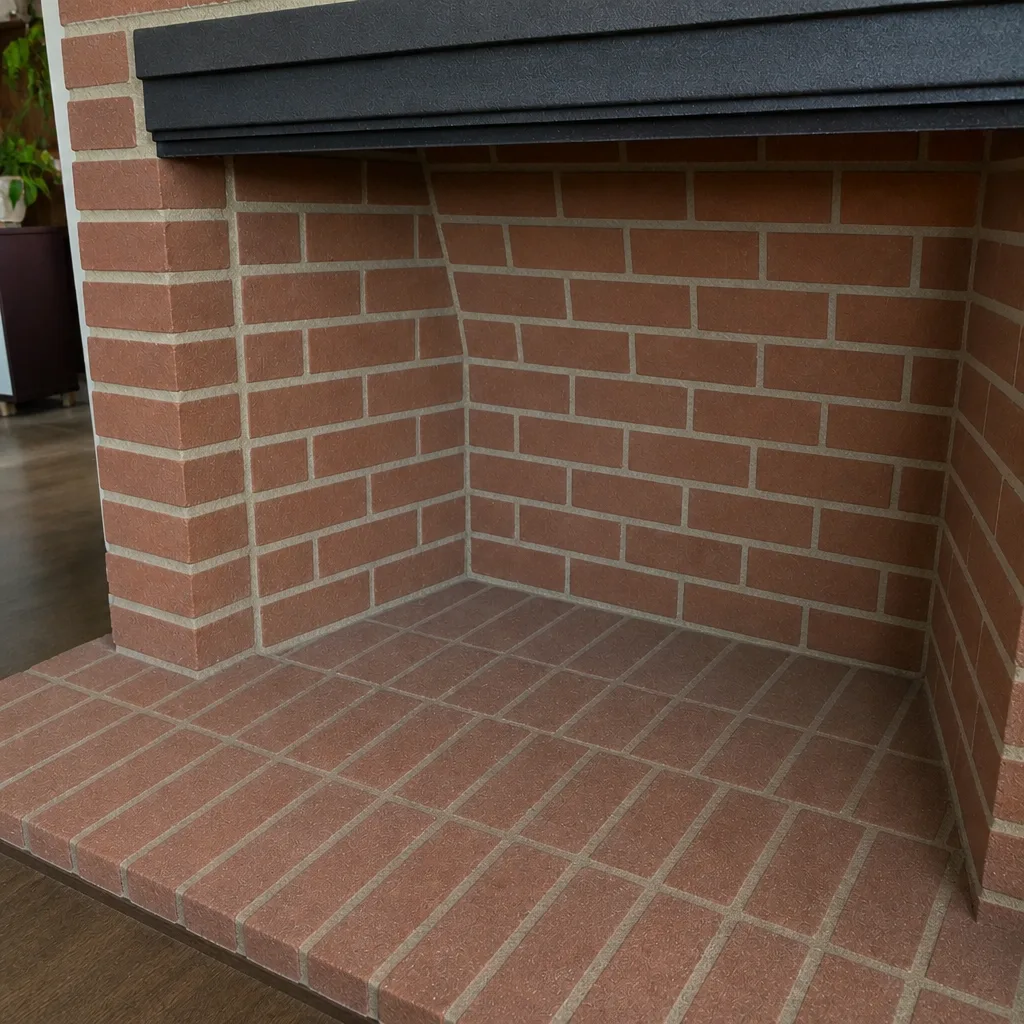
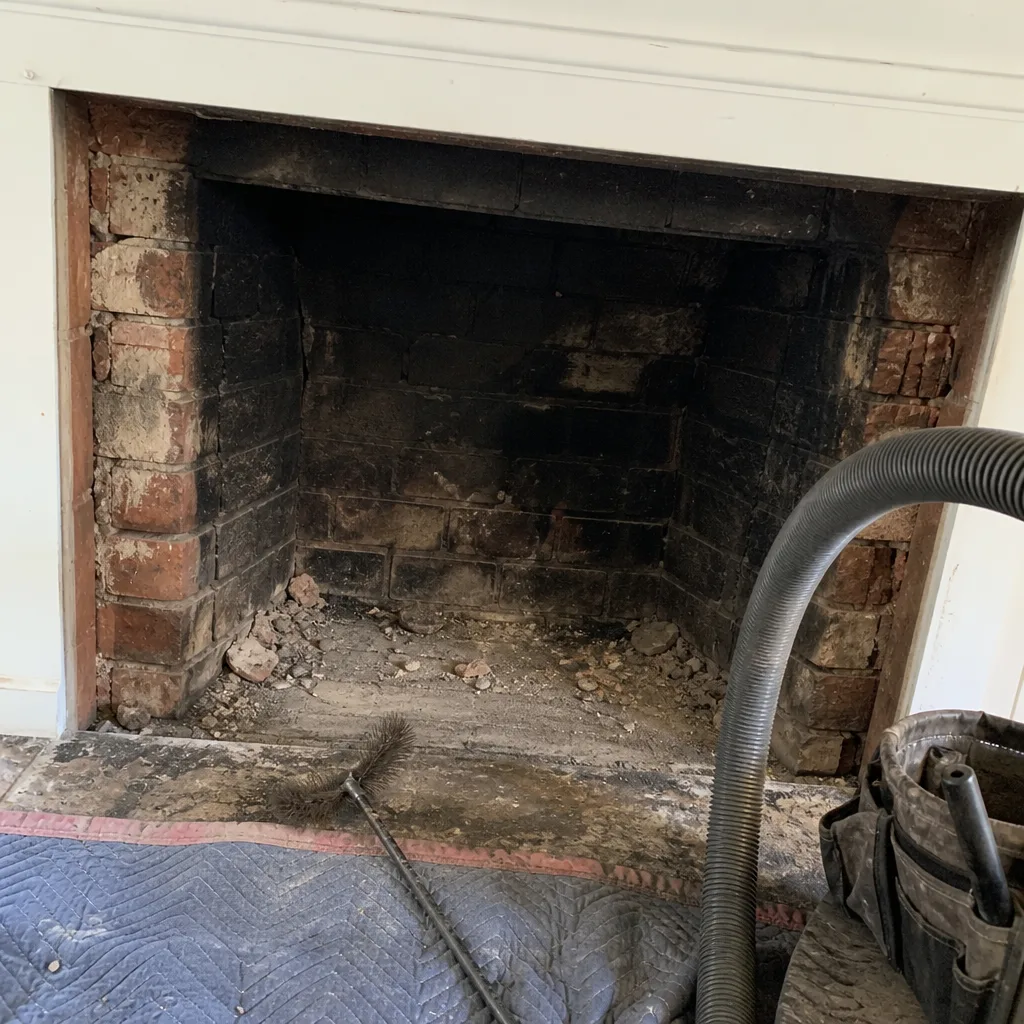
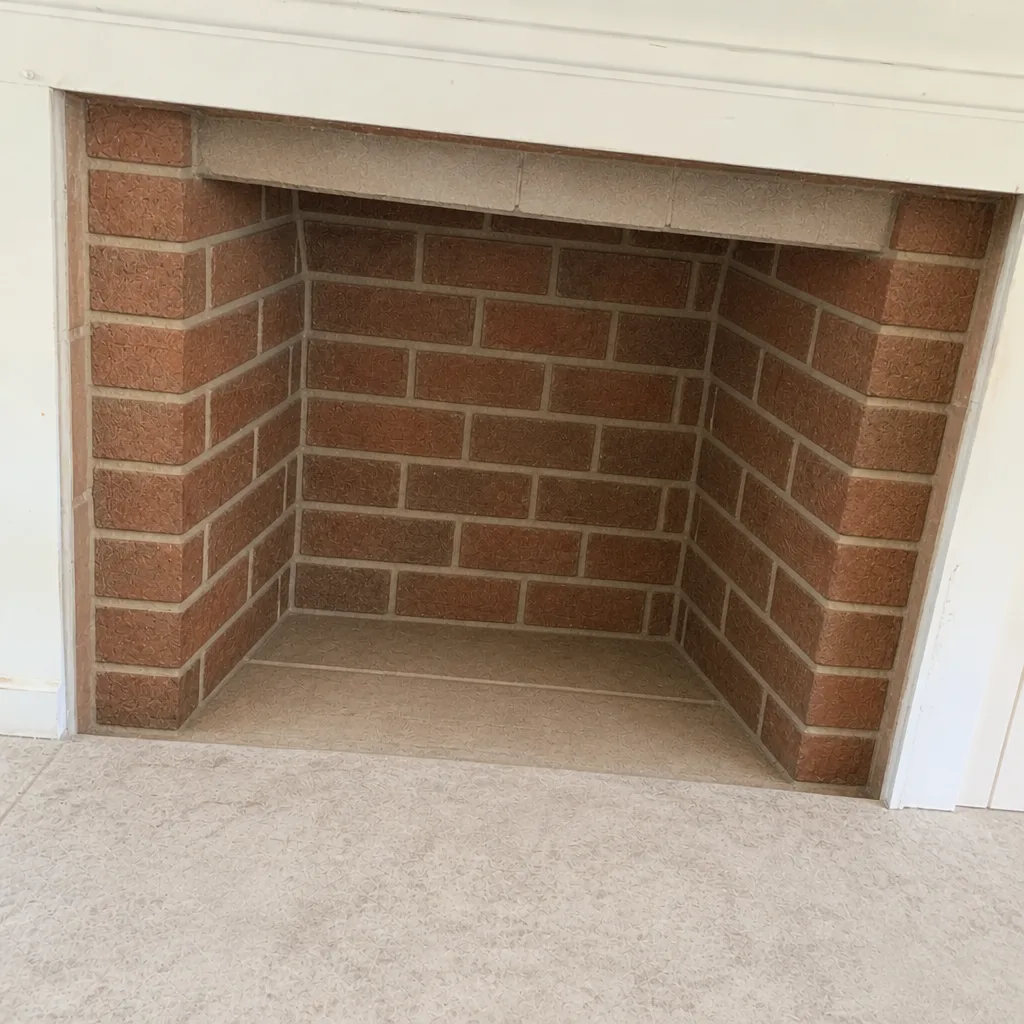
See the difference
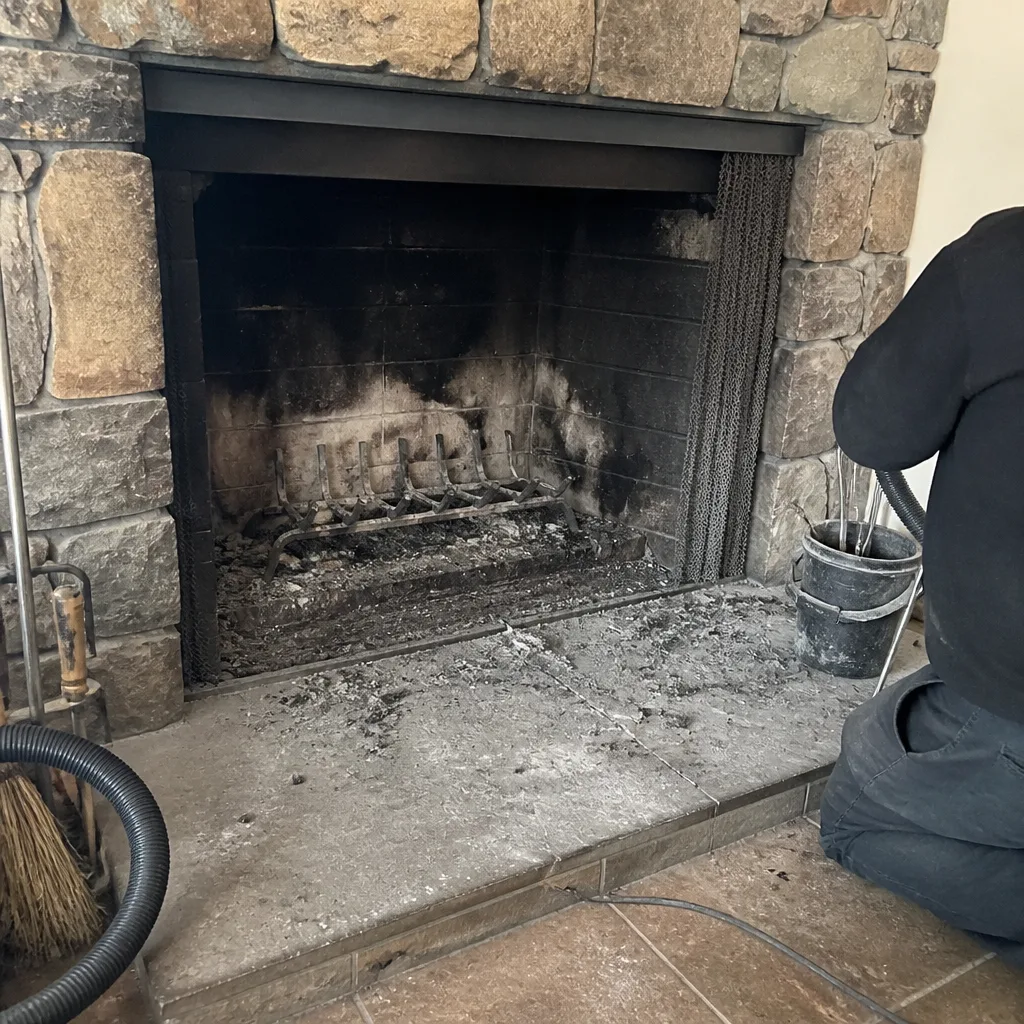 Before
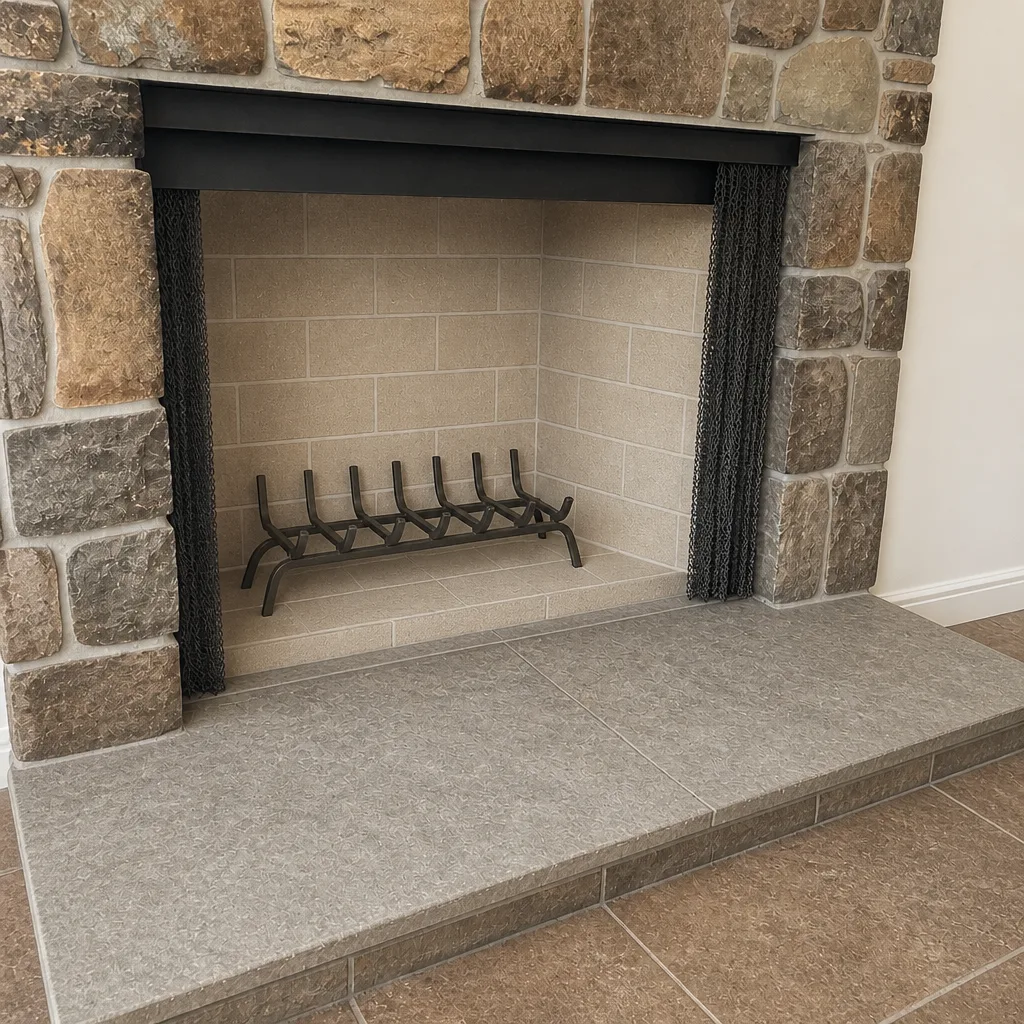 After
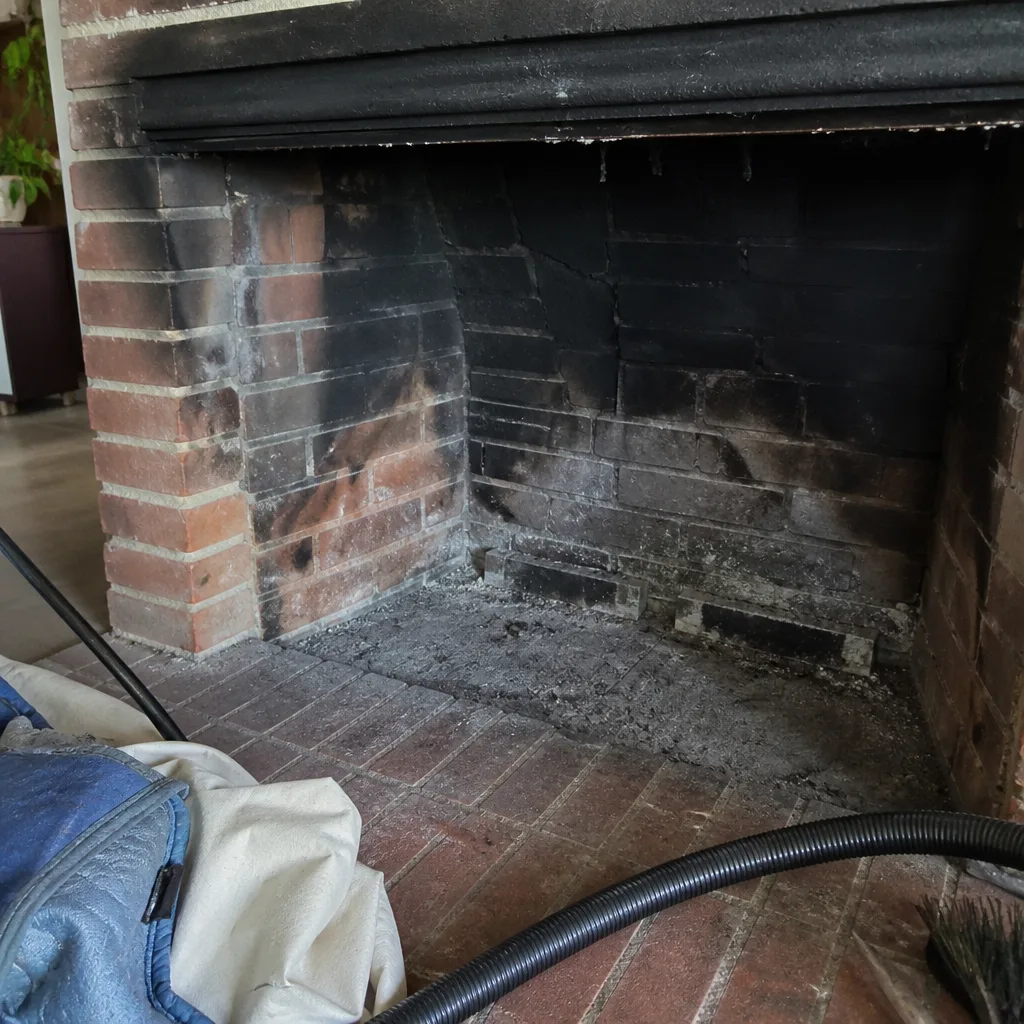 Before
 After
 Before
 After
Fuel Type and Liner Age: The Two Variables That Change Everything
Two chimneys on the same street, in the same house style, can need completely different checklists. The variables that matter most are fuel type and liner age. Here’s how each breaks down.
Wood burning. A wood fireplace produces creosote on the flue walls and soot throughout the system. The creosote can range from a light, dry fluff to a sticky, glazed coating that is highly flammable. Wood-burning chimneys in Tustin need at least one annual sweep, and heavy users – the ones burning through real cords of wood each winter – sometimes need a mid-season check as well. The grading of the creosote is what determines whether the sweep is routine or urgent.
Gas inserts. A gas insert produces almost no creosote, but it does produce acidic condensation that can attack a liner over time. Gas chimney inspections focus on the liner joint condition, the termination cap, and any condensation staining. They also need to be checked for proper venting, since a partially blocked vent on a gas appliance is a genuine carbon monoxide risk. Gas chimneys still get checked annually, just with a different focus.
Pellet stoves. Pellet stoves produce a fine fly ash that can clog a flue faster than most homeowners expect. The vent needs to be brushed and inspected on a schedule set by the manufacturer, and no amount of good firebox maintenance can substitute for cleaning the flue.
Liner age is the second variable. A clay tile liner that’s older than a few decades is more likely to have hairline fractures and more likely to need restoration work. A stainless DuraFlex or equivalent liner holds up longer but still needs the annual verification. When our technicians check your liner, the age and material determine whether we recommend monitoring, resurfacing, or a full reline – and never anything more than the evidence actually shows.
The Annual Sweep: What We Actually Do
An annual chimney sweep is not just a brush down the flue. Done properly, it’s a documented inspection of the entire system, and it produces a report a homeowner can actually use. This is what the visit looks like for a typical Tustin wood-burning chimney:
- Set up containment. Drop cloths on the hearth and floor, a vacuum with a HEPA filter rated for fine ash, and protection for the firebox opening.
- Inspect the firebox and damper first. We look at firebrick condition, mortar joints, damper operation, and the smoke shelf before sweeping. Anything the firebox is telling us about a problem in the flue above.
- Brush the flue from the firebox up. We sweep from below using the right brush for the liner material – a poly brush for stainless, a poly or wire for clay depending on condition – and work the full flue height.
- Sweep the smoke chamber and smoke shelf. These are the two areas most often skipped by non-specialists. Creosote collects on the sloped surfaces of the smoke chamber, and it matters just as much as the flue walls.
- Inspect the liner from inside. We use a camera inspection to look at the full length of the liner for fractures, joint separation, or heavy glazed creosote that needs a follow-up chemical treatment.
- Check the crown, cap, and top of the chimney. Photographed from the roof, and the photos go into the report.
- Document everything with photos. The photo report is what turns “we recommend X” into “here’s what we’re seeing at X on your chimney.” You see exactly what we see.
- Provide a written report and any recommendations. If we find something beyond a routine sweep, the recommendation is sized to the evidence – and we tell you clearly when something can safely wait until next year.
That’s the visit for a standard chimney. A gas insert has a shorter sweep but a more detailed vent check. A pellet stove is different again. If you’d like to know whether your chimney is due, or you’re not sure what was done before you moved in, our Tustin Chimney Sweep team can walk you through it.
Common Mistakes to Avoid
Most of the costly chimney problems we see in Tustin weren’t caused by a lack of work – they were caused by the wrong work, or the right work done in the wrong order. Here are the mistakes that come up most often:
- Treating “sweep” and “inspection” as separate visits. A sweep without a documented inspection tells you nothing about the liner, the crown, or the smoke chamber. A quality sweep includes the inspection and a photo report.
- Running a gas insert chimney on the wood-fireplace checklist. Gas inserts don’t produce creosote, but they can produce condensation damage and venting problems. They need a different inspection focus than a wood-burning flue.
- Skipping the cap check because the fire hasn’t been lit yet. The cap is doing its work in the summer and fall, not in the winter. A displaced cap lets debris in for months before the first fire.
- Leaving a persistent smoky smell untreated. In Tustin, a smell in the room after a Santa Ana event is often a wind-pressure issue, but it can also be a liner fracture. Unless it’s been inspected, don’t assume it’s benign.
- Assuming a hardware-store cap is a substitute for the right cap. Cap sizing and attachment to the flue and crown matters; a poorly fitted cap is nearly as bad as no cap at all. This is why we specify Famco or Copperfield caps rather than generic replacements.
- Waiting until the first cold week to book the annual sweep. The calendar fills up fast in Tustin once the season turns. Scheduling in September or early October gets the work done before the rush.
- Accepting a liner replacement recommendation without seeing the evidence. Reputable inspection is camera-based and photographed. If you can’t see the reason for the recommendation, ask to see it, and don’t proceed until you can.
When to Call a Professional
Not every chimney issue needs a technician visit today, but several specific situations shouldn’t wait. Call when you smell smoke in the room after a Santa Ana event, when the damper won’t close fully, when you see loose mortar or a cracked crown, when a fire is consistently spilling smoke into the room, or when you can’t remember the last time the chimney was swept. If your chimney has a clay tile liner and you don’t know its condition, that’s a call as well; a camera inspection is the only way to know without guessing. Same when a gas insert starts producing a lingering odor or the CO detector has ever alarmed – that last one deserves a call to your gas utility first and a chimney inspection right after. Tustin Chimney Sweep offers free estimates in Tustin – call (877) 770-1857. We answer 24/7. Fast dispatch from 7am to 7pm, Sunday through Friday.
Frequently Asked Questions
Once a year for most wood-burning chimneys, with a mid-season check if you burn heavily. Tustin’s short, intense burning season can concentrate a full winter’s worth of creosote into a few months. Gas inserts and pellet stoves have their own schedules set by the appliance manual and the inspection findings. Our technicians have up to 10 years of experience assessing creosote grade and choosing the right interval. Call (877) 770-1857 to book a pre-season sweep – estimates are free.
Yes – through fine debris, displaced caps, and barometric backdraft. The dry offshore winds carry dust, leaf matter, and palm fragments into the flue and onto the smoke shelf, and the pressure swings can push smoke smell into the house with the damper closed. A short inspection after each notable event catches the issues while they’re small. If you’ve noticed a persistent smoke smell after a wind event, call (877) 770-1857. We answer 24/7.
A firebox inspection, a full flue sweep with the correct brush for the liner material, a smoke chamber and smoke shelf sweep, a camera liner inspection, and a check of the crown and cap with photos in a written report. That’s the standard we hold our technicians to. Anything less leaves parts of the system undocumented. Call (877) 770-1857 to schedule – estimates are free.
Reseat a cap that’s tilted but otherwise sound; replace one with rusted mesh, cracked welds, or a hinge that no longer holds. A cap in the wrong size for the flue is a better candidate for replacement than for repair. We specify Famco and Copperfield caps for exactly this reason – the fit is what keeps debris out. Call (877) 770-1857 for a free estimate.
Not always. Many clay tile flues can be restored with HeatShield ceramic resurfacing rather than fully relined, which saves cost and meets code. The determination comes down to the extent of the damage as seen on a camera inspection. If the liner is beyond restoration, a DuraFlex liner system is the standard answer. Call (877) 770-1857 to schedule an inspection and see the evidence before deciding.
Yes – the problems a sweep prevents are the ones you don’t notice until they’re expensive. Crown cracks, liner fractures, and creosote buildup don’t announce themselves, and by the time smoke or water damage shows up, the underlying repair is usually larger. The sweep plus inspection is the cheapest entry point to the whole system. Call (877) 770-1857 – estimates are free.
The Bottom Line
The right chimney checklist for a Tustin home is built around three variables a generic national guide ignores: our short, intense burning season, dry Santa Ana wind events that push debris and backdraft through the flue, and the fuel type and liner material specific to your fireplace. Run the pre-season checklist before October, inspect the cap and crown after every significant wind event, verify the liner during the annual sweep, and photograph the crown and mortar to watch for slow failures like early ChimneySaver cracking. Every step either prevents a repair or documents that your chimney is in good shape. If you’re not sure where to start, a documented sweep with a photo report and a camera inspection tells you everything you need to know. Tustin Chimney Sweep provides five core services – chimney sweeping, chimney inspection, fireplace repair, chimney repair, and cap and crown work – and one inspection, one company, no subcontractors. Nothing is recommended without camera evidence you can see for yourself. Call (877) 770-1857 for a free estimate. We answer 24/7. Fast dispatch from 7am to 7pm, Sunday through Friday.
Written by the team at Tustin Chimney Sweep.