
Last updated November 25, 2026
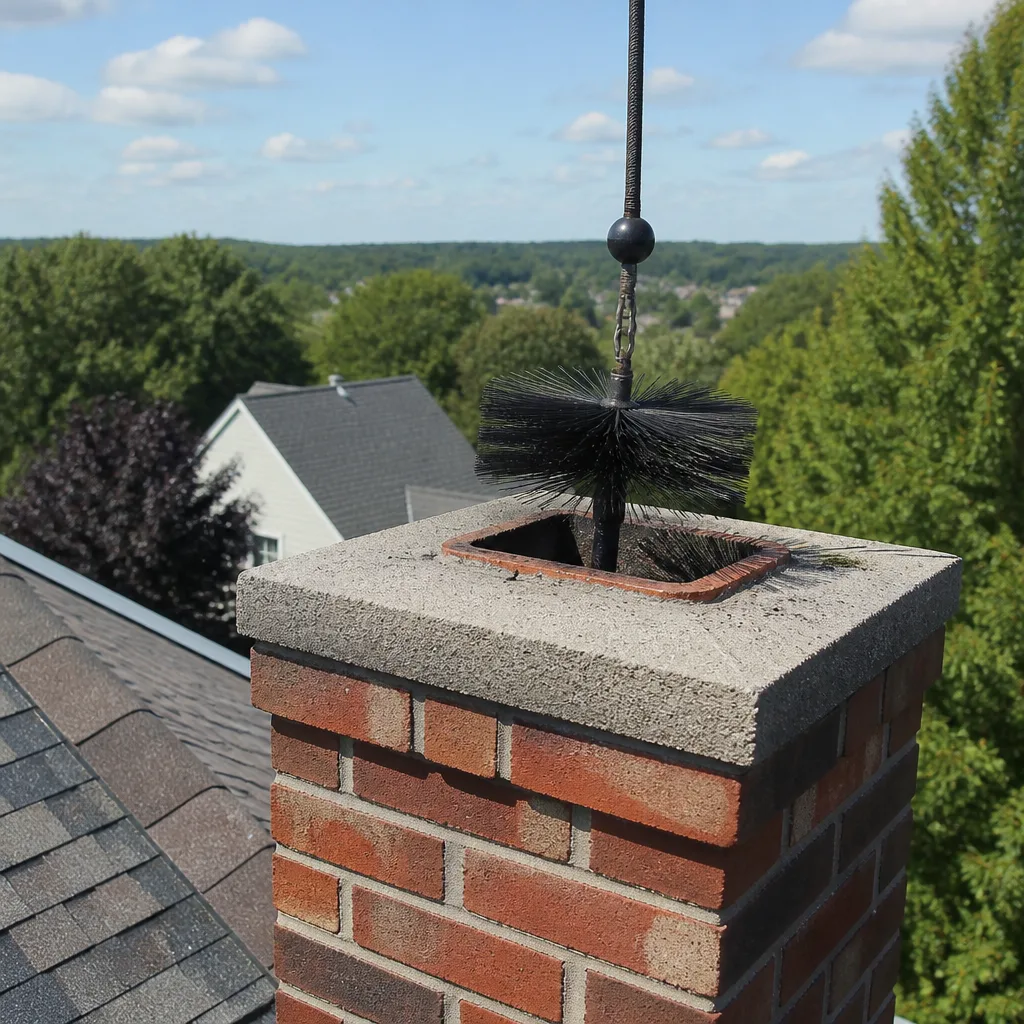 Sweep & inspection
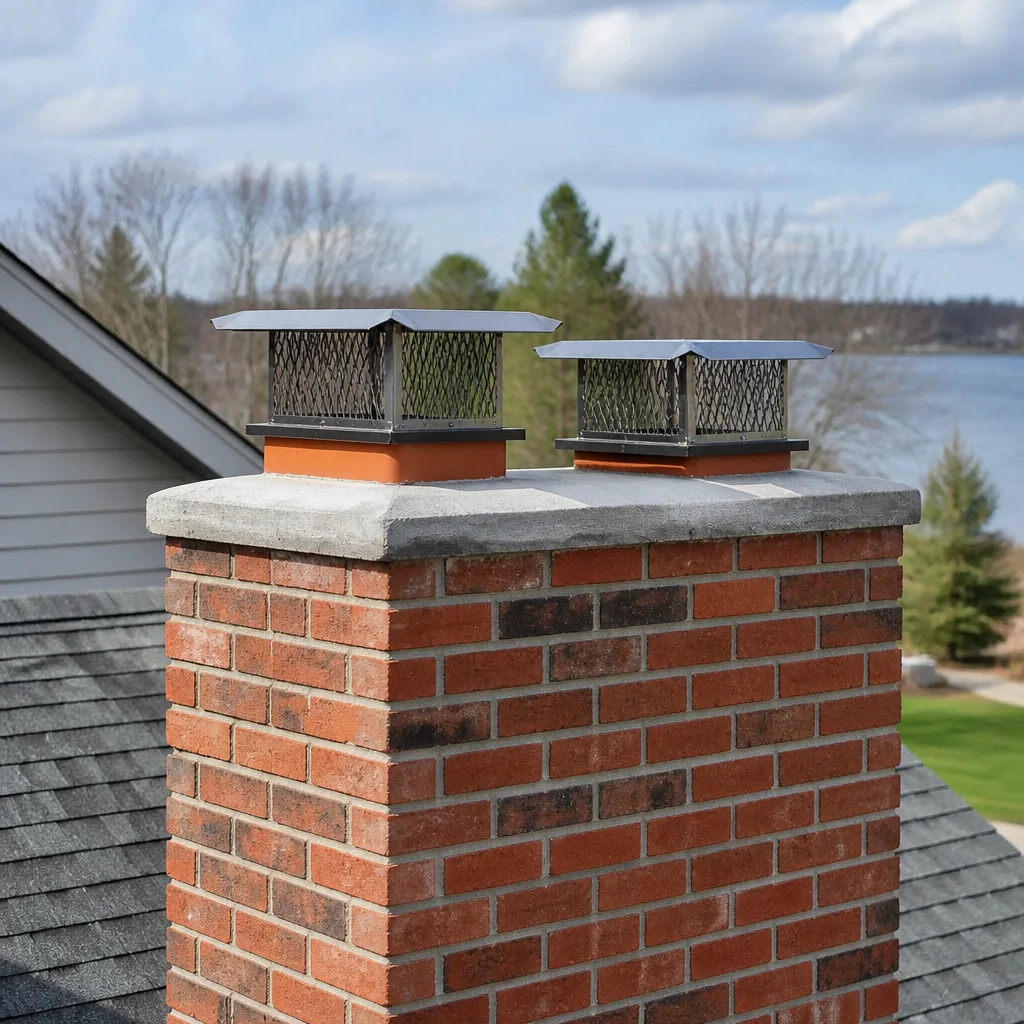 Caps & crowns
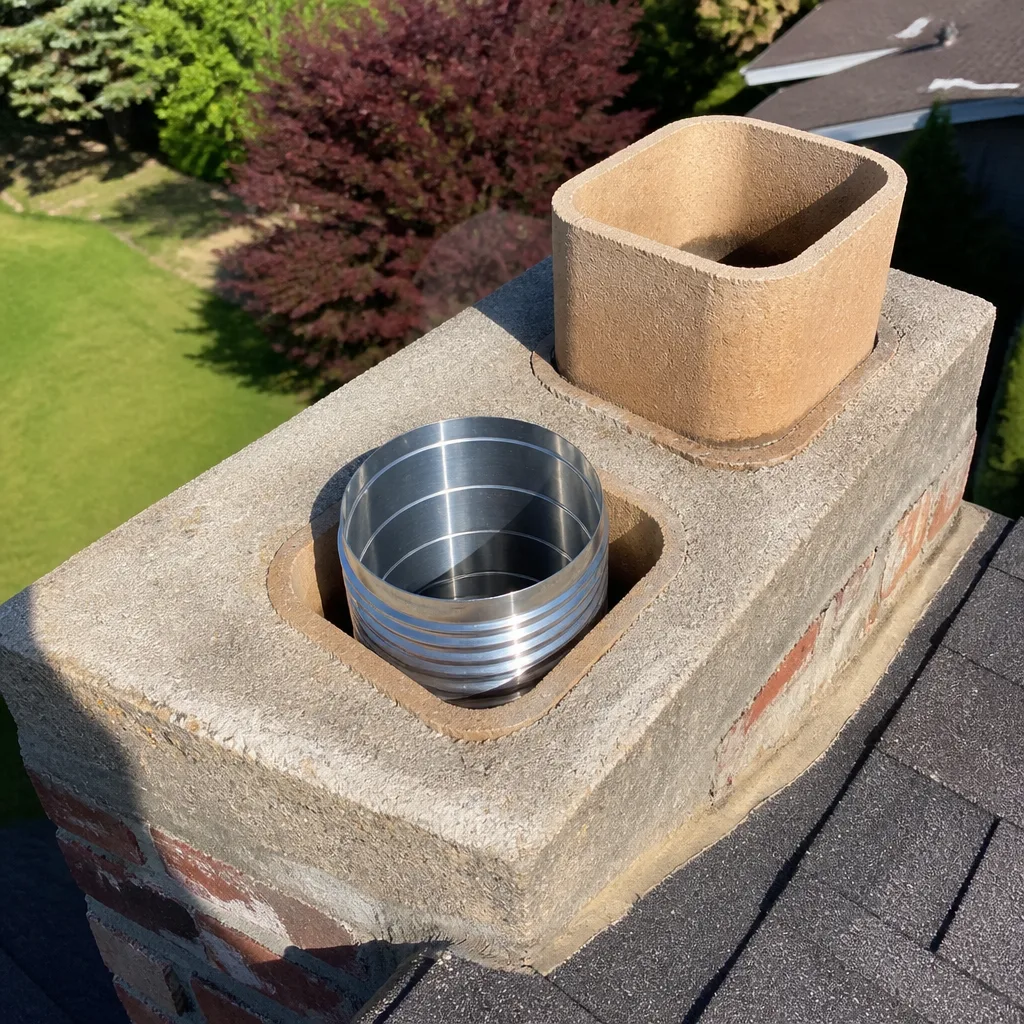 Flue relining
 Masonry repair
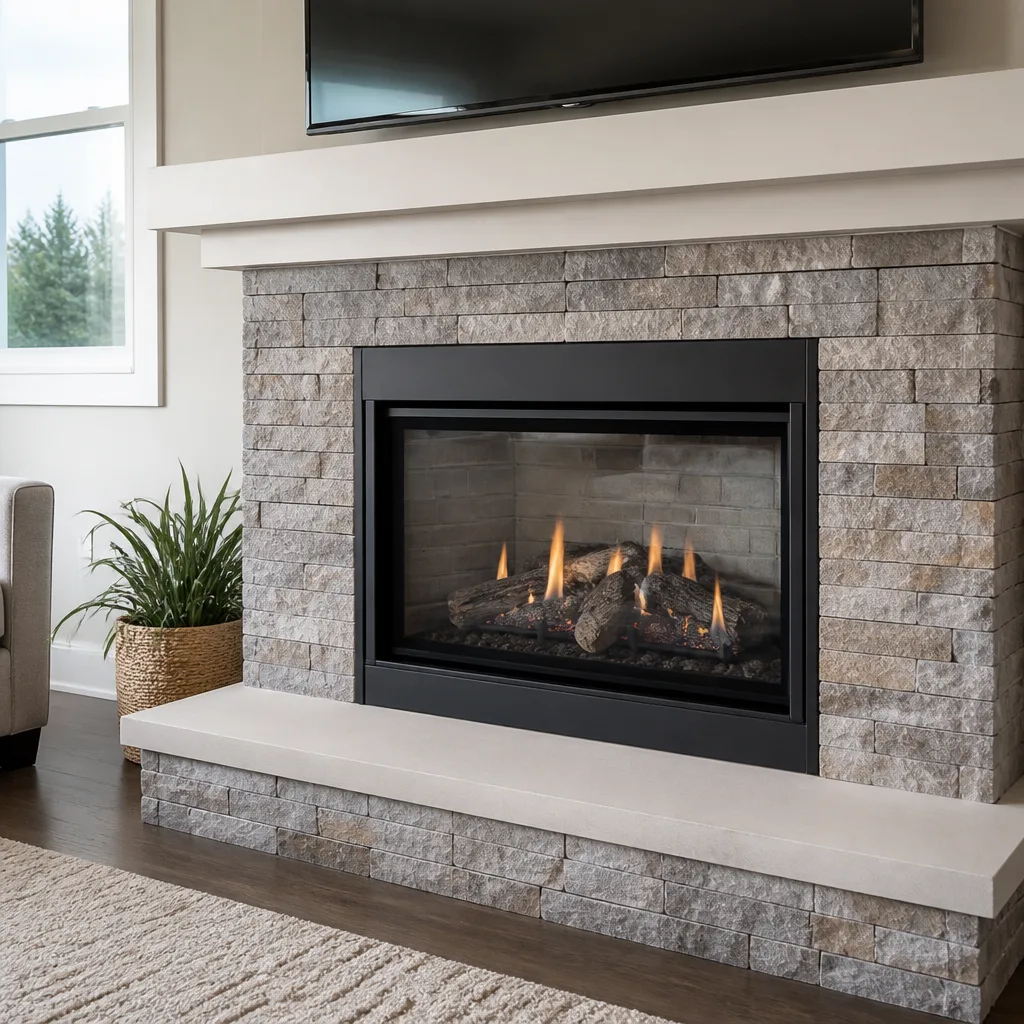 Gas fireplace service
Level 1 sweep and inspection to the NFPA 211 annual standard - flue, crown, cap, and flashing checked and photographed
Chimney sweep logs do not sweep chimneys. They loosen some creosote - which then falls where a brush and vacuum still have to collect it.
Seasonal Chimney Cleaning Care for Tustin: Year-Round Homeowner’s Guide
Follow a standard four-season chimney guide in Southern California and you’ll do maintenance at the wrong time twice a year. Most guides are written for a climate with hard freezes and a long heating season. Tustin doesn’t have that. What we have is a compressed burn window, a fall wind event that fills gutters and chimney caps with debris, and a late-spring marine layer that pushes moisture into masonry for weeks. Miss the fall inspection and you start the season with a compromised flue. Miss the late-spring moisture check and small cracks quietly grow all summer. This guide lays out the actual maintenance rhythm for Tustin, month by month, so the work happens when the conditions demand it.
Quick Answer
The Tustin chimney calendar runs on three anchors, not four seasons: a September – October inspection before burn season, in-season creosote monitoring from November through February, and a March – April post-season cleaning plus moisture check before the marine layer settles in. Off-season months are for cap, crown, and waterproofing work. Skip the fall inspection or the spring moisture check and you’re guessing at the condition of your flue during the months it matters most.
Styles & brands we work with
- Sweep & inspection
- Caps & crowns
- Flue relining
- Masonry repair
- Gas fireplace service
Table of Contents
- Why Tustin’s Climate Breaks the Standard Chimney Calendar
- September – October: The Most Important Inspection Window of the Year
- November – February: In-Season Monitoring and Creosote Rate
- March – April: Post-Season Cleaning and the Moisture Check
- May – August: Cap, Crown, and Off-Season Protection
- Marine Layer Humidity and Efflorescence in Tustin Chimneys
- Wood Species and Creosote: Almond, Citrus, and Local Firewood
- What a Chimney Inspection Actually Covers
Why Tustin’s Climate Breaks the Standard Chimney Calendar
A chimney maintenance calendar written for the Northeast assumes four things: a long, cold heating season, a freeze-thaw cycle that opens masonry joints, snow load that stresses the crown, and a summer dry season that gives masonry months to dry out. Tustin has almost none of those conditions in the way a generic guide describes. What it does have is a shorter burn window, intense fall wind events from the Santa Ana corridor, and a spring-to-summer marine layer that holds humidity against the top of the chimney for weeks.
That combination means two timing problems for anyone following a generic annual schedule:
- The fall inspection is usually too late. Santa Ana winds move debris across rooftops in the weeks before most homeowners think about their chimney. By the time a “fall inspection” happens in November, the flue has already been running for weeks with whatever accumulated over the summer.
- The spring moisture check is usually skipped. A generic guide has nothing to say about late-spring humidity. In Tustin, that’s the window when winter rain intrusion and marine layer moisture are doing their real work on masonry and on the crown.
Tustin’s housing stock makes this matter more than it might in a newer climate. Homes in Old Town Tustin, along the neighborhoods near Pine Tree Park and Columbus Tustin, and throughout the older tracts off Newport Avenue and Red Hill Avenue tend to have older chimneys and, in many cases, original or lightly updated crowns. Those structures are sensitive to the specific pattern of moisture exposure this region produces. An older crown with a hairline crack doesn’t fail dramatically. It absorbs moisture slowly, all spring, and then that moisture expands in the crown’s own warmth the following fall. That’s the cycle our seasonal rhythm is designed to interrupt before it starts.
The rest of this guide walks through the calendar in the order it actually happens, with the work each window should include. If you only take one idea from this page, take this: in Tustin, the chimney year starts in September, not October.
September – October: The Most Important Inspection Window of the Year
September and October are the critical prep months in Tustin, and they’re the window most guides place too late. Here’s what’s actually happening:
- Santa Ana wind events have started moving dry debris – leaves, pollen, palm frond fragments, fine dust – across rooftops and into chimney caps.
- Crowns that expanded through summer heat have settled. Hairline cracks that opened in July are now the size that admits water.
- Liner joints and ceramic flue surfaces have gone through a full year of thermal cycling without being looked at.
- Wood piles are being laid in for the season, and the quality of the firewood going in this month sets the creosote rate for the entire burn window.
Here’s what a September pre-season inspection should include:
- Cap and screen check. Confirm the cap is seated, the screen is intact, and no nesting material from the summer has been pulled into the flue. Birds and rodents move in over the dry months in Southern California; a blocked screen is a carbon monoxide problem in the making.
- Crown inspection. Look for cracks, spalling, and separation from the flue tile. This is the cheapest moment in the year to catch crown damage, because you’re still ahead of the rainy season.
- Visible flue check from the firebox and, where accessible, the top. Look for glazed creosote, missing mortar joints, cracked flue tiles, and evidence of prior water intrusion.
- Firebox and damper operation. The damper should open fully and seal when closed. A damper that doesn’t seal lets heat out and moisture in during the off-season.
- Wood supply review. Confirm what’s laid in for the season is seasoned. This one step has more effect on creosote accumulation than almost anything else a homeowner does.
If anything looks off in this pre-season inspection, we can quote it and the homeowner can schedule it separately. But this is also the window for a routine chimney sweep if the previous season ended without one, and it’s the window for any fireplace repair that needs to be finished before the first fire. One inspection in September catches what a November visit can only report. Call (877) 770-1857 to book this window.
November – February: In-Season Monitoring and Creosote Rate
Once the burn season starts in Tustin, the focus shifts from inspection to monitoring. The question every homeowner should be able to answer by February is: how much creosote has built up in my flue, and at what rate? The answer depends on two variables you control: fire frequency and wood species.
Fire frequency is straightforward. A household burning three or four fires a week from November through February accumulates creosote significantly faster than a household burning a fire a week, and a household running a fire most nights needs a mid-season check rather than waiting for spring. The general rule to sweep at roughly a quarter-inch of creosote applies here as everywhere, but the timing of that quarter-inch depends on burn rate, not on the calendar.
Wood species matters more in Tustin than most guides acknowledge, because the local firewood mix includes species that behave differently in a residential firebox:
- Almond wood burns hot and produces a fast, intense heat. It leaves relatively little soot but drives higher flue temperatures, which stresses older flue tile if the liner is compromised. Almond is popular locally because it’s abundant and burns cleanly when well seasoned; it is not forgiving of a damaged liner.
- Citrus wood is dense and slow-burning. It produces a longer, lower flame, which tends to deposit more creosote per cord than a hot-burning hardwood, especially if the wood isn’t fully seasoned. Citrus also tends to be wetter at the core even when the outside feels dry, which is why a moisture meter matters if you burn a lot of it.
- Mixed hardwood from local suppliers varies widely. Oak, eucalyptus, and mixed softwoods all appear in local cords, and each has a different creosote profile.
Our advice for the November – February window is practical. Burn dry wood, keep a thermometer or an infrared check on the flue pipe where visible, and be honest about fire frequency. If you’re running fires most nights, tell us when you call for a sweep so we schedule the visit at the right point. A mid-season sweep in January is a normal Tustin schedule for a high-use household. A household burning a fire a week can usually wait until spring. Both are legitimate schedules; the calendar just isn’t what drives them.
Watch for these signs during the burn season and stop using the fireplace if any appear:
- Draft that used to pull strongly now feels weak or smoky.
- Creosote smell in the room even when no fire is lit.
- Visible glazed deposits on the flue walls when you look up from the firebox.
- Any smoke entering the room when the damper is open.
Any of these mean the sweep moves up, not back. A sweep in the middle of the burn season is far less disruptive than a chimney fire.
March – April: Post-Season Cleaning and the Moisture Check
March and April are the most overlooked months on a Tustin chimney calendar, and the ones where waiting until fall can cost real money. Two things have just happened:
- The burn season has deposited most of the year’s creosote onto the flue walls.
- Winter rain has had weeks to work into every seam, crack, and mortar joint on the crown and the chimney exterior.
A spring cleaning handles the first. A moisture check handles the second. Doing both in April catches water damage at the stage where it’s still cosmetic – a cracked crown, a slightly spalling mortar joint, a beginning interior stain near the flue – rather than a full chimney repair job that could have been a reseal.
Here’s what a spring post-season visit should include:
- Full sweep. Clear the season’s creosote while the flue is cool and the house has months to air out.
- Crown moisture check. Look for dark patches, soft spots, and hairline cracks in the crown. A crown that’s absorbed water will show it.
- Flue tile inspection. Any crack in a flue tile is a pathway for moisture to reach framing or masonry during the off-season. It’s also a combustion-gas pathway during the season. Both are worth fixing now.
- Attic and interior moisture check. Look at the chimney chase from inside the house and from the attic for any staining or efflorescence that indicates water is migrating through the masonry.
- Cap and screen inspection. Winter wind and spring debris are the two biggest causes of cap displacement. A loose cap on a Tustin chimney in March will admit rain for months.
If everything checks out, you’re clear until September. If the crown or the flue is showing wear, spring is the cheapest window to address it because the fix will be in place before next rainy season. We specify HeatShield for ceramic flue resurfacing where the flue is structurally sound but the walls need restoration. HeatShield restores the flue surface without a full liner replacement, which is the right call in many older Tustin homes and is a method recognized by the CSIA. Where restoration isn’t sufficient, we specify a DuraFlex liner system. Having both options available in the same visit is why chimney-only specialists can often quote a smaller scope than a generalist contractor would.
May – August: Cap, Crown, and Off-Season Protection
Summer is the off-season for burning, but not for the chimney. In Tustin, the May-to-August window is when the two most common points of water intrusion – the cap and the crown – either get addressed or get worse. It’s also when wildlife from the surrounding hills and canyons is most active around rooflines, and a Tustin chimney without a proper cap is a Tustin chimney that will have a nesting problem by fall.
Off-season work falls into four buckets:
- Cap replacement. A chimney cap is the single best dollar spent on long-term chimney health. We stock and specify Gelco and Famco caps, which means in most cases we can inspect, identify a failed cap, and replace it on the same visit rather than ordering and returning.
- Crown repair. A crack, spall, or separation in the crown allows water to reach the structure below. Crown repair in the dry season cures properly and is ready for rainy season. Crown repair in the rainy season is a temporary fix.
- Waterproofing. For masonry chimneys, a breathable waterproofing product like Saver Systems ChimneySaver seals the outside against rain while allowing the masonry to release vapor from within. A non-breathable sealer traps moisture and does more harm than good; the product matters.
- Pest exclusion checks. Southern California wildlife – birds, squirrels, raccoons, wasps – treats an open or damaged chimney as a cavity to occupy. Screen integrity, cap fit, and flashing gaps are all worth checking in the summer, when a problem is easy to fix.
There’s a preventive value here that goes beyond the chimney. A failed crown or a missing cap admits water into the chimney chase. Water in the chase can travel to framing, to the ceiling below, and to adjacent roof sheathing. The chimney is often the first place this kind of water intrusion starts and the last place a homeowner thinks to look. Our summer visits exist so our customers don’t discover it in January when the ceiling stains.
One point on the summer inspection itself: it’s not a substitute for the September one. A summer visit is about exterior protection and cap work. The September visit is about the flue. Do both, and the year is properly covered.
Marine Layer Humidity and Efflorescence in Tustin Chimneys
The marine layer that rolls inland from the Pacific – May Gray and June Gloom, as locals call them – has a measurable effect on chimney masonry in Tustin. For weeks at a time, chimneys sit under a persistent low cloud deck that keeps exterior surfaces damp and, more importantly, keeps the interior of the masonry from drying out. Add the residual moisture from winter rain, and by June a brick chimney that isn’t properly sealed is holding water it will keep holding well into summer.
The visible sign of this is efflorescence: a white, powdery bloom on the exterior of the chimney or in the firebox area. Efflorescence is the salt residue left behind as moisture migrates through masonry and evaporates at the surface. It is not, on its own, structural damage. It is a reliable sign that moisture is moving through the brick or mortar, which is the condition that leads to structural damage over time.
Here’s what efflorescence means and what it doesn’t:
- It means water is getting in. The source is one of four places: a failed crown, a compromised cap, deteriorated flashing where the chimney meets the roof, or missing or failed waterproofing on the masonry face. Diagnosis comes before any sealer goes on.
- It doesn’t mean the chimney is failing. Mild efflorescence on an older chimney is common and can usually be addressed by finding and closing the intrusion point and then applying a breathable waterproofing.
- It doesn’t mean sealant is the whole answer. Sealing over an active leak traps moisture inside the masonry. This is why we diagnose first and specify second.
Local weather patterns favor the moisture side of that equation. In a wetter climate, masonry can dry out between rain events. Here, the sequence is different: winter rain wets the masonry, and the spring marine layer keeps humidity high enough that it doesn’t dry out on schedule. Then summer heat hits a chimney that’s still holding moisture, and the thermal expansion drives the moisture deeper. This is exactly the cycle that waterproofing in May and June is designed to break, and it’s the reason we recommend waterproofing as an off-season preventive step rather than a rainy-season repair.
When the efflorescence is heavy or persistent, or when it’s accompanied by interior staining, the diagnosis moves from preventive to repair. An inspection at that point should include a close look at the crown and the flashing, since those are the two failures that most often show up as efflorescence on the face. Olympia Chimney components are part of what we specify for flashing and top-sealing work when that scope is needed.
Wood Species and Creosote: Almond, Citrus, and Local Firewood
Firewood choice in Tustin has more effect on chimney condition than most homeowners expect, partly because the local firewood supply leans on species a generic guide doesn’t discuss. Here’s how the three species that show up most often behave in a residential firebox:
- Almond. Dense, dry, and hot. Almond produces a high, fast flame and a lot of heat. It burns clean when properly seasoned but leaves a hard, glassy creosote if it’s burned wet. Almond also stresses older flue tile more than a medium hardwood because the flue gas temperatures stay high longer.
- Citrus. Dense but slower to season than it looks. Citrus wood that feels dry on the outside can be holding 25% or more moisture at the core, which is a problem because the deposited creosote from wet citrus is heavier and more tar-like. If you burn a lot of citrus, the creosote rate goes up, and the sweep should come sooner.
- Mixed hardwood. Everything else, and quality varies by the supplier. Ask what the mix is. Oak and eucalyptus are common; both burn well when fully seasoned and both produce heavy creosote when they aren’t.
The moisture question dominates everything else. The single best thing a Tustin homeowner can do for chimney health is to burn wood at 20% moisture or below. A cheap moisture meter is a small investment that changes how the flue behaves over a season. Split a piece, test the fresh face, and don’t burn anything above roughly 20% – what gets burned wet goes up the flue and comes back as creosote.
Two more local notes. First, never burn construction scrap, plywood, pressure-treated wood, or painted wood, even in small quantities. The deposits from treated and painted wood are corrosive, and the deposits from plywood glues are worse. Second, wood that has been stored uncovered through a rainy season should be assumed wet until you’ve tested it. Even a dry summer doesn’t fully dry a covered pile that got soaked in winter.
If you’ve been burning one species heavily – particularly citrus – assume the flue has accumulated creosote faster than the calendar suggests. Call for a sweep when you switch wood sources, not just at the annual mark. We specify our sweep work per job, and the fastest way to know what your flue needs is to have it looked at.
What a Chimney Inspection Actually Covers
Not every chimney inspection is the same scope. The industry standard recognizes three levels, and knowing which level you’re getting matters when someone quotes you “an inspection”.
- Level 1 inspection. A visual inspection of readily accessible portions of the chimney and firebox, without tools that would disturb the structure. This is the right level for a routine annual check where conditions haven’t changed.
- Level 2 inspection. Everything in Level 1, plus accessible portions of the attic, crawlspace, and chimney chase, and often a video scan of the flue interior. This level is appropriate after a chimney fire, when there’s been a change in fuel or appliance, when a property with a chimney changes hands, or when an issue has been identified and needs a closer look.
- Level 3 inspection. Everything in Level 2 plus removal of parts of the chimney or surrounding structure to access areas that can’t be reached otherwise. This is a diagnostic step, not a routine one, and only happens when a specific issue has to be seen.
For most Tustin homeowners on a routine annual schedule, Level 1 is what the September visit includes. If something specific turns up – a crack, an efflorescence bloom, a creosote smell in the room – the visit moves up a level on the spot. Our annual inspection visits cover the accessible portions of the flue and firebox, the exterior cap and crown, and the visible flashing, so you know the state of every chimney component that a routine check should reach.
For homeowners who have never had the chimney inspected, or who’ve just moved into a home in Tustin with an existing fireplace, we recommend starting with a Level 2 so there’s a baseline. After that, an annual Level 1 keeps you current unless something specific turns up. The full Tustin Chimney Sweep service line covers the sweep, the inspection, and any repair that comes out of it, which means one visit produces one complete answer. For a broader look at how a sweep works, see our chimney sweep page.
Common Mistakes to Avoid
- Waiting until November for the pre-season inspection. By then the season has started and Santa Ana debris has been sitting in the cap for weeks. The right time in Tustin is September, before the winds peak and before the first fire.
- Skipping the late-April moisture check. This is the mistake that costs the most over time. Crown and flashing failures caught in spring are minor repairs. Caught in October, they’re structural.
- Sealing over efflorescence without diagnosing the source. A non-breathable sealer over active moisture traps water in the masonry. Find the intrusion point first, then seal.
- Assuming “fall cleaning” is the full service. In Tustin, the fall cleaning misses the marine layer window and the summer pest-exclusion window. Year-round means both, not just the season you think about.
- Burning citrus or other dense local wood without testing its moisture. Wet citrus deposits heavier creosote than the fire looks like it should. A moisture meter on the split face tells you more than a visual check.
- Replacing a cap with a hardware-store model without checking fit. A poorly-fitted cap admits water at the seams and blocks draft if the screen gauge is wrong. It’s worth specifying a properly-sized cap, which is why we carry Gelco and Famco.
- Treating an efflorescence bloom as cosmetic. It’s a sign of active moisture movement. Sometimes it’s benign, sometimes it’s the first visible sign of a failing crown. It doesn’t resolve itself either way.
See the difference
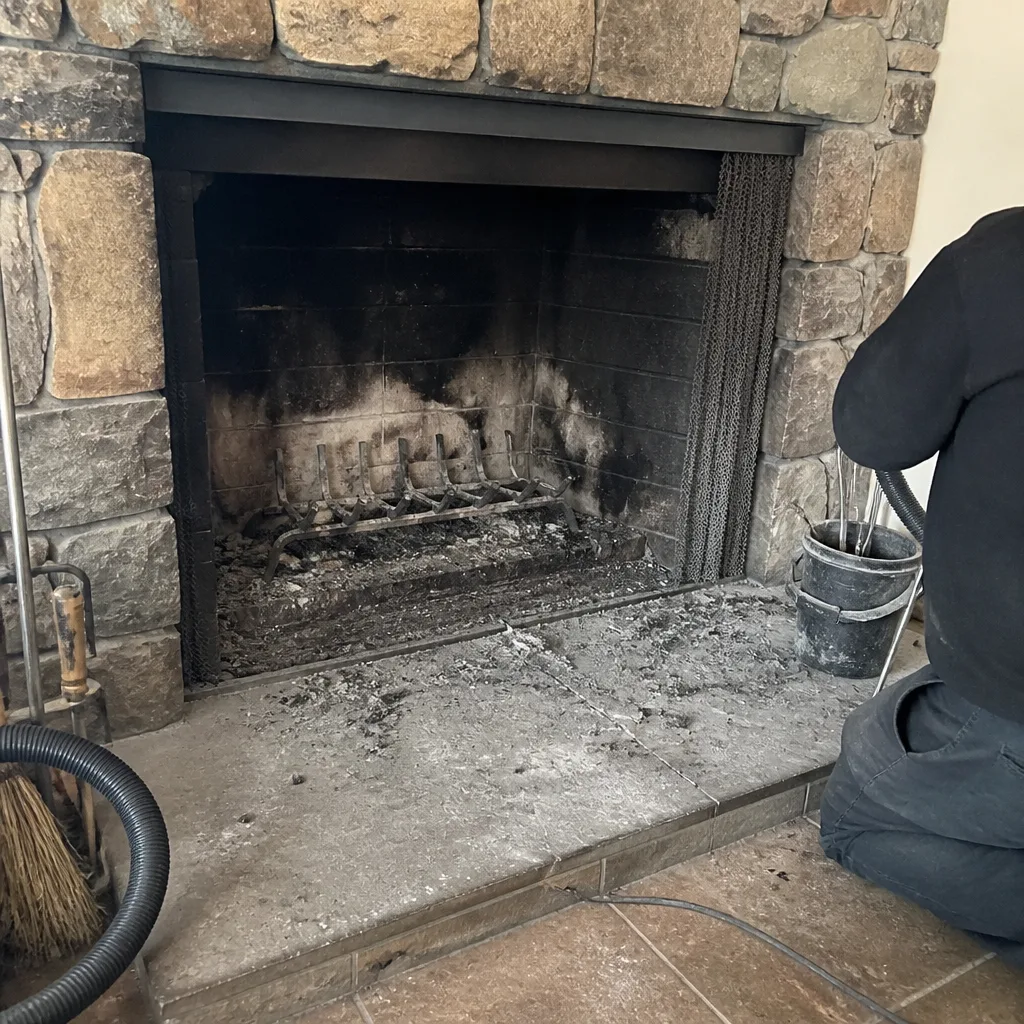 Before
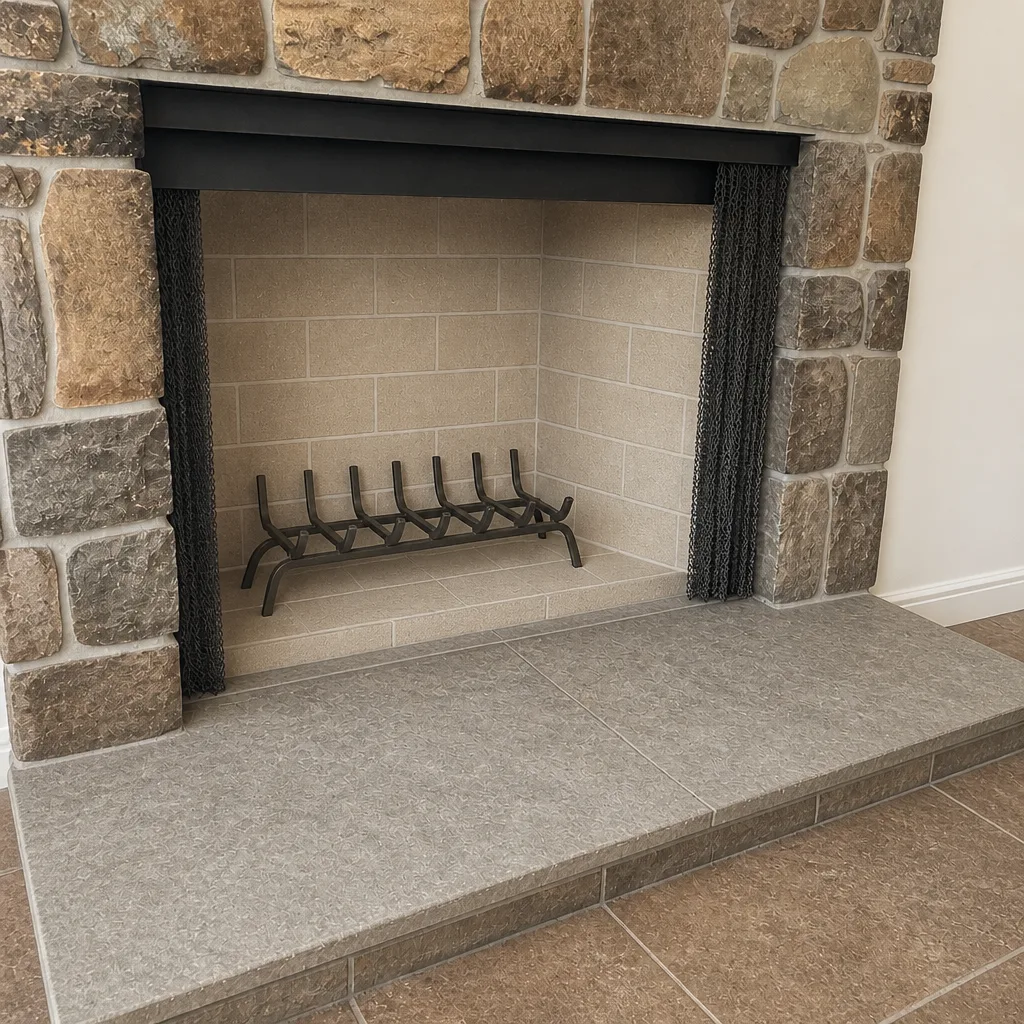 After
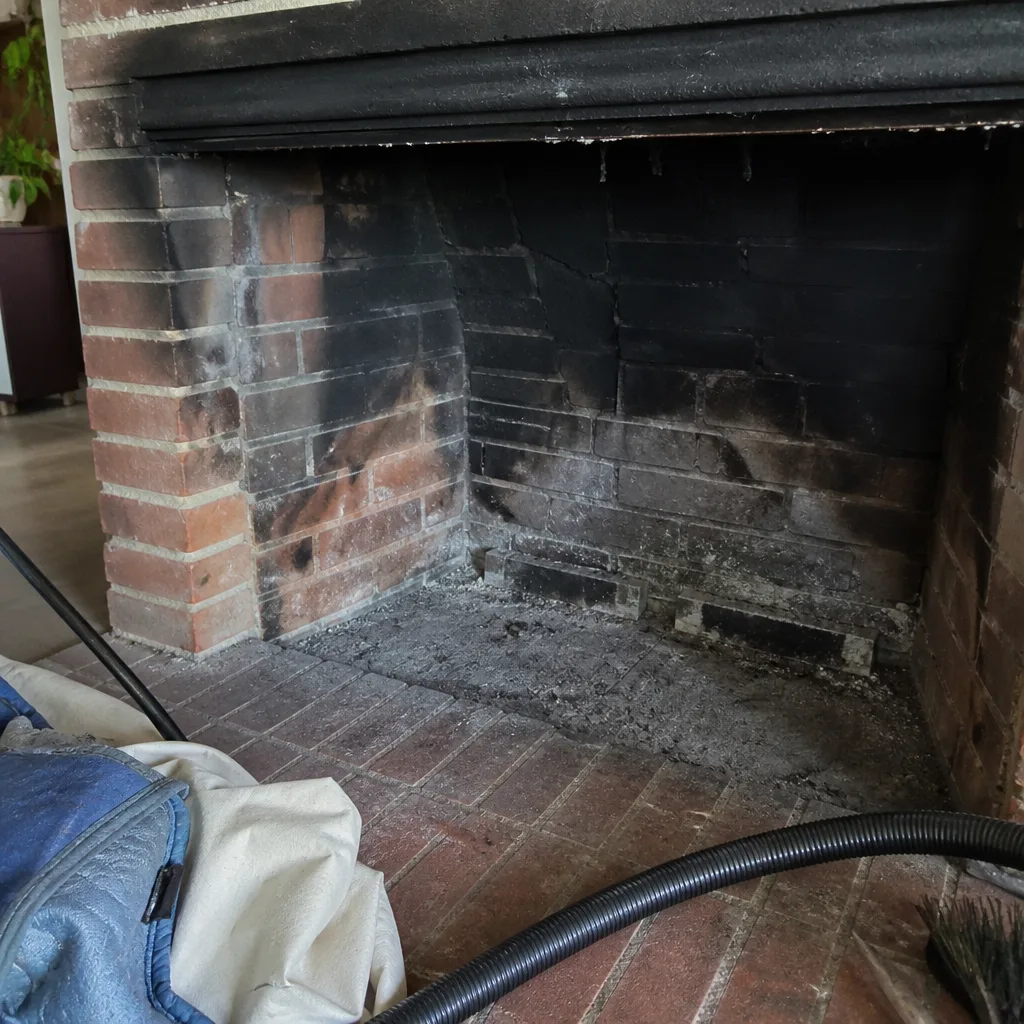 Before
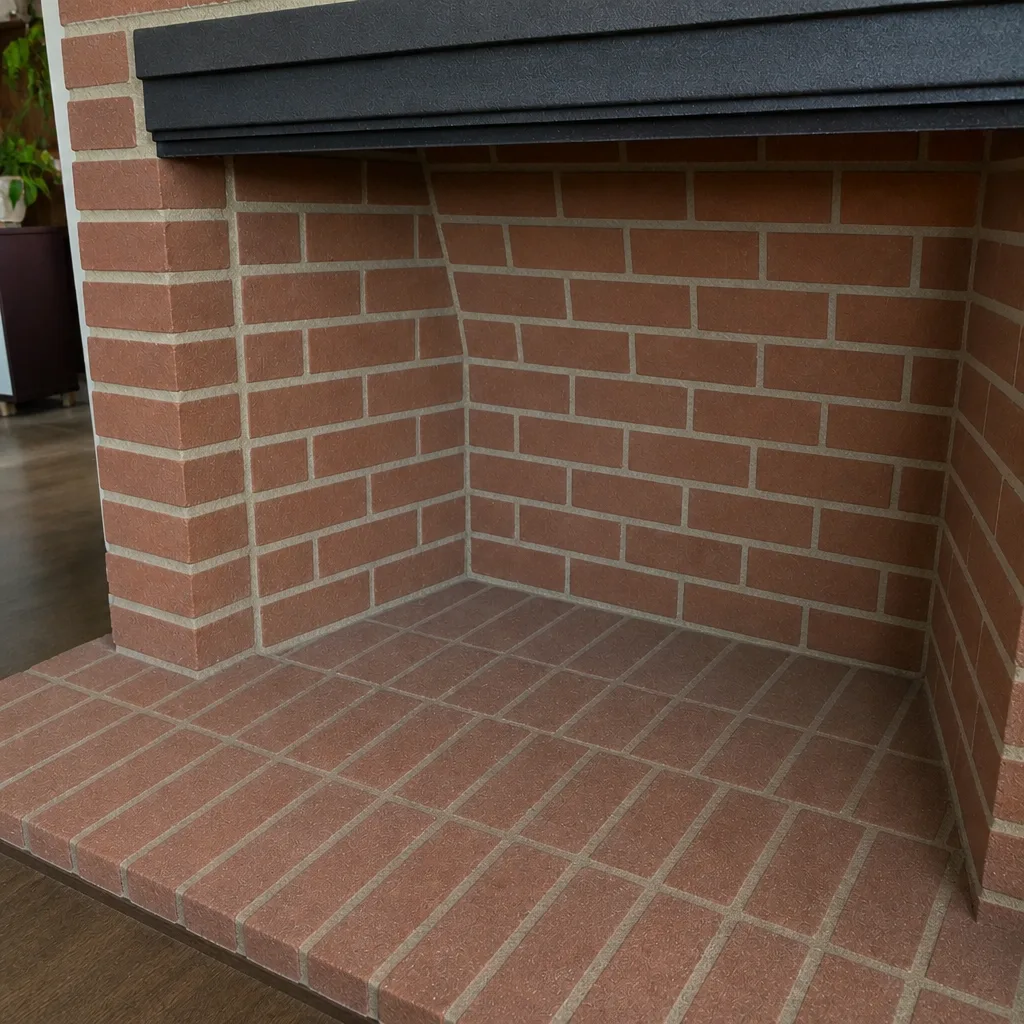 After
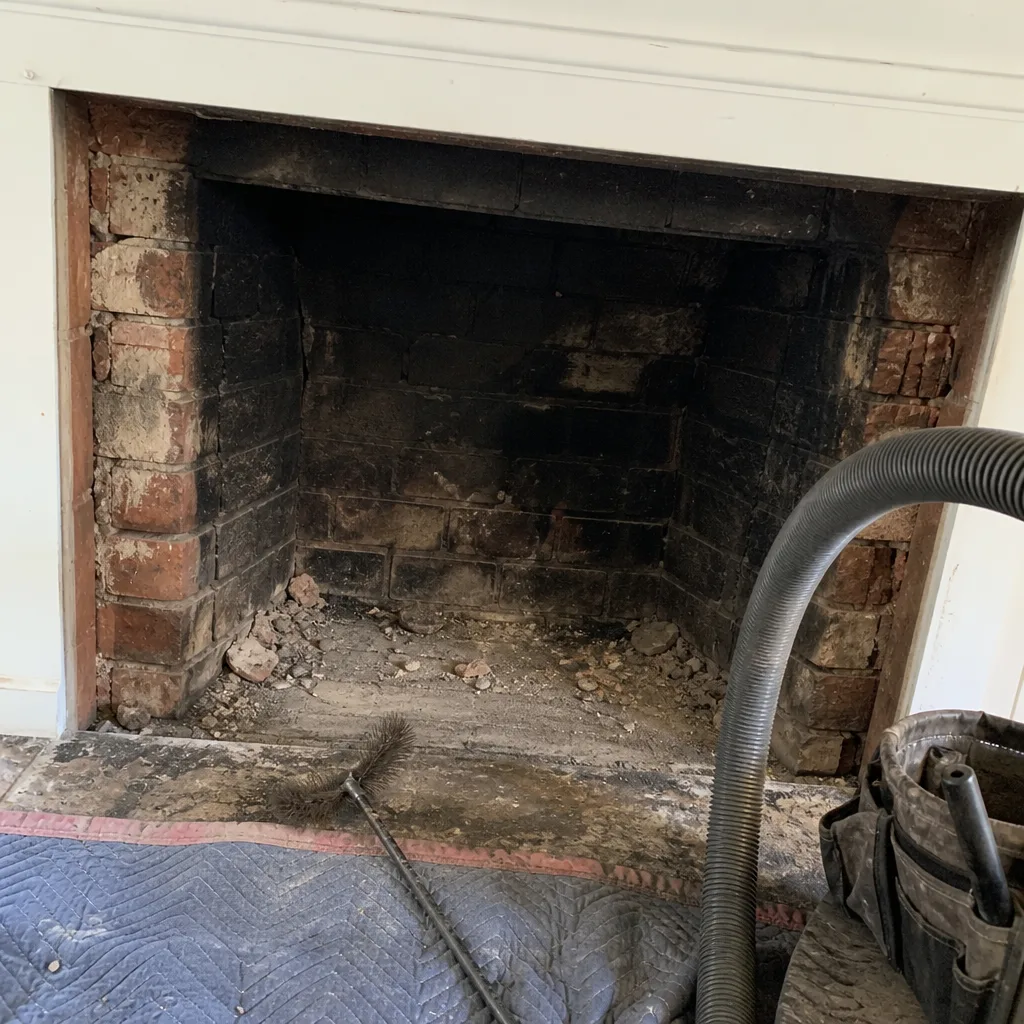 Before
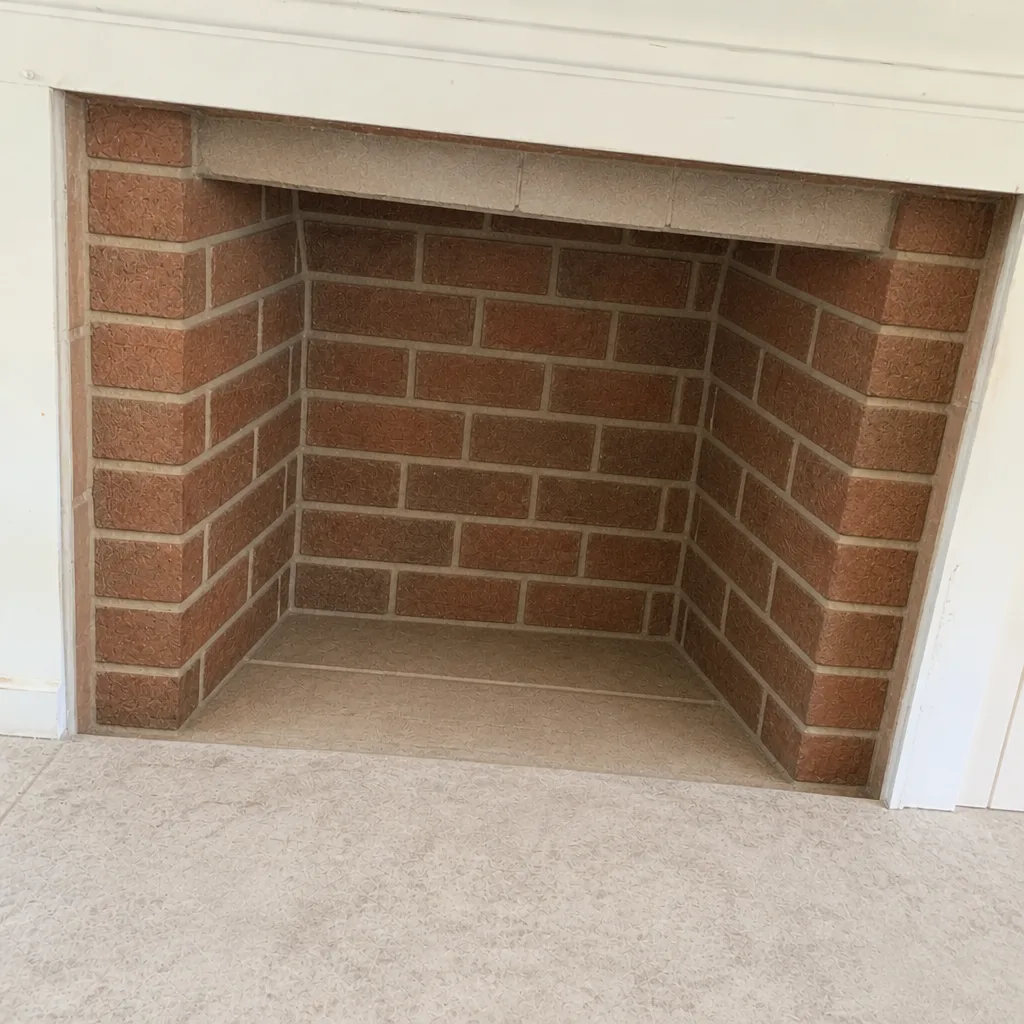 After
When to Call a Professional
Call us if any of these apply. First, if the fireplace hasn’t been swept in over a year and you plan to burn this season. Second, if you’ve noticed any of the in-season warning signs: weak draft, creosote smell, smoke rollback, or visible glazed deposits on the flue. Third, if you’ve found efflorescence on the chimney exterior or interior staining near the flue, especially in spring. Fourth, if the chimney has been through a chimney fire, even a small one, which calls for a Level 2 inspection regardless of timing. Fifth, if you’re buying or just moved into a home in Tustin with a fireplace and don’t have a maintenance history. Sixth, if the cap is damaged, missing, or visibly loose, or if you’ve heard animal activity in the flue. Our technicians have up to 10 years of experience, and Tustin Chimney Sweep offers free estimates in Tustin – call (877) 770-1857. We answer 24/7, with fast dispatch from 7am to 7pm, Sunday through Friday.
Frequently Asked Questions
Once a year is the baseline for most households, but the actual interval in Tustin depends on burn frequency and wood species. A household burning several fires a week from November through February should plan a mid-season check in January, while a household with a fire a week can usually hold to the annual spring sweep. The quarter-inch creosote threshold is what drives the timing, not the calendar, so tell us on the call how often and what you burn.
September catches the chimney before Santa Ana winds load the cap with debris and before the first fire of the season. It also gives a full window to fix anything the inspection finds before the burn season starts. An inspection in late October or November catches problems but forces them to be repaired while the season is already underway.
Yes, for masonry chimneys specifically. The May Gray and June Gloom pattern holds humidity against the chimney for weeks and keeps the masonry from drying out after winter rain. Combined with the moisture that’s already worked into the crown or a flashing gap over winter, this is the window that turns minor cracks into structural failures over time. Waterproofing in May and June breaks that cycle.
Efflorescence is the white, powdery salt bloom that appears on masonry as moisture migrates through it and evaporates. It’s not structural damage on its own, but it’s a reliable sign that water is moving through the chimney. The next step is to find the source – crown, cap, flashing, or masonry surface – before applying any waterproofing. Call (877) 770-1857 to schedule a diagnosis if you’re seeing it on your chimney.
Gas inserts need an annual inspection too, and the check covers different points than a wood fireplace does. The flue, venting, and combustion air path all need to be verified, and any debris in the cap or screen matters as much for a gas insert as for wood. The seasonal timing in Tustin stays roughly the same for both: September inspection, spring check.
Cap replacement, crown repair, waterproofing with Saver Systems ChimneySaver, and pest exclusion checks are the four off-season priorities. All of them are best done in the dry months, when materials cure properly and there’s time to address anything the inspection finds before the rainy season. Family and Gelco caps can be specified directly, which means we can usually resolve cap issues on the same visit as the inspection.
The Bottom Line
In Tustin, the chimney year starts in September with the pre-season inspection, runs through in-season monitoring from November to February, moves into spring cleaning and the moisture check in March and April, and settles into cap, crown, and waterproofing work from May to August. Wood species and fire frequency adjust the timing of the sweep, not the overall shape of the year. The single most leveraged habit is the September inspection, because it catches everything else while there’s still time to fix it before the season. The single most overlooked habit is the spring moisture check, because that’s the window when water damage is still cheap. We’ve laid out the year for Tustin specifically because the standard four-season calendar doesn’t match this climate, and following it means doing the right work at the wrong time. Call (877) 770-1857 to book any of the seasonal windows on this list. We answer 24/7, with fast dispatch from 7am to 7pm, Sunday through Friday, and the estimate is free. The written estimate sets the final price for any work we recommend.
Written by the team at Tustin Chimney Sweep.